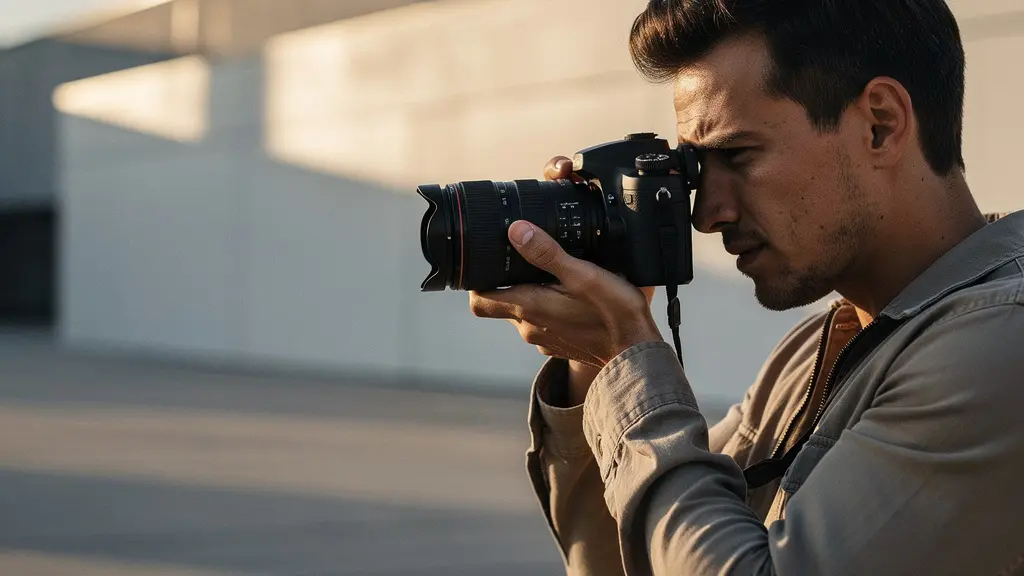
Switching to prime lenses is the single most effective way to cure compositional laziness and develop true photographic intent.
- They force you to “pre-visualize” the shot by imposing a fixed perspective, building essential mental discipline.
- Their simpler optical design delivers superior detail and performs dramatically better in challenging low-light conditions.
Recommendation: To experience this creative shift firsthand, try taping your zoom lens to 35mm or 50mm for a full week before investing in a dedicated prime.
The convenience of a modern zoom lens is undeniable. It offers a universe of perspectives from a single standing position, a tempting proposition for any photographer. Yet, this very convenience often becomes a crutch, fostering a habit of compositional laziness. We’ve all been there: standing still, twisting a zoom ring, and choosing the path of least resistance rather than physically engaging with the scene. This reactive approach can lead to a portfolio of images that feel technically competent but lack intention, soul, and a distinct point of view.
The common refrain is that prime lenses are sharper, faster, and lighter. While these technical truths are valid, they only scratch the surface of why primes are transformative. They fail to capture the philosophical shift that occurs when a photographer willingly embraces limitation. The true power of a fixed-focal-length lens lies not merely in its optical formula but in its function as a compositional training system. It systematically dismantles lazy habits by imposing a creative constraint.
This is not about gear superiority; it’s about methodological rigor. By removing the ability to zoom, you are forced to think, to move, and to see the world through a consistent frame. You begin to develop an instinct for your chosen focal length, a skill known as pre-visualization. This guide will deconstruct exactly how this discipline is built, moving beyond the simple specs to explore how primes forge a more thoughtful, deliberate, and ultimately more powerful photographic voice.
Contents: Why a Prime Lens Builds Unbreakable Discipline
- Why Do Prime Lenses Resolve More Detail Than Expensive Zooms?
- How to visualize Your Frame Before Lifting the Camera?
- 35mm vs. 50mm: Which Prime Lens Tells a More Honest Story?
- The Aperture Mistake: Why f/2.8 Zooms Fail in Candlelight
- How to Build a 2-Lens Prime Kit That Covers 90% of Needs?
- Helios 44-2 or Canon L Series: Which Best Serves Artistic Portraiture?
- Why Does Sensor Size Actually Affect Depth of Field?
- How to Use Long Focal Lengths to Isolate Details in Chaos?
Why Do Prime Lenses Resolve More Detail Than Expensive Zooms?
The argument for prime lens superiority begins with a fundamental principle of physics: simplicity breeds quality. An expensive zoom lens is an engineering marvel, containing numerous glass elements and groups that move in complex ways to change focal length. This complexity is also its primary weakness. Every additional piece of glass is another surface for light to pass through, scatter, and refract. According to optical design principles, prime lenses typically contain 30-40% fewer glass elements than their zoom counterparts.
This reduction in optical components has a direct and measurable impact on image quality. Fewer elements mean less internal reflection and a more direct light path from the subject to the sensor. This results in images with higher acuity and, more importantly, superior micro-contrast. While “sharpness” refers to the ability to resolve fine lines, micro-contrast is the lens’s ability to render subtle tonal transitions and textures. It’s the quality that makes an image “pop” and feel three-dimensional.
A complex zoom, even a professional-grade one, struggles with this. The scattered light within its many surfaces can subtly reduce the dynamic range and create a flatter, less vibrant image. A prime lens, optimized for a single focal length, can dedicate its entire design to maximizing contrast and clarity. This optical honesty delivers a cleaner, more detailed file that provides a superior starting point for any creative work, forming the bedrock of compositional discipline.
How to visualize Your Frame Before Lifting the Camera?
The most profound shift when adopting prime lenses is not mechanical but mental. You lose the ability to reactively frame a scene by twisting a zoom ring, and in its place, you must learn to proactively pre-visualize. This is the art of seeing the world through the fixed perspective of your lens, even before you raise the camera to your eye. It is a foundational skill that separates an intentional photographer from a reactive one. You stop hunting for pictures and start anticipating them, knowing instinctively how a scene will translate through your chosen frame.
This “compositional muscle memory” is not an innate talent; it is a trainable skill. It requires deliberate practice to internalize the field of view of your lens. One of the most effective starting points is the ‘Frame within a Frame’ technique. By physically using your hands or an empty slide mount, you can practice seeing the world in a fixed aspect ratio, learning what fits and what is excluded. This exercise forces you to physically move your body to change composition, the very essence of “zooming with your feet.”

As the image above demonstrates, this physical act of framing builds a direct neural pathway between your vision and the final photograph. You are no longer a passive observer but an active participant, making conscious decisions about perspective, distance, and inclusion. This is the heart of compositional discipline: making choices with intent, not convenience.
Your Action Plan: Developing Pre-Visualization
- Practice the Physical Frame: Several times a day, use your hands to form a rectangle and frame scenes around you. Actively notice what you must exclude to create a compelling composition.
- Build a Visual Library: Choose a single object and photograph it from multiple positions—standing, kneeling, and lying prone—without changing your focal length. This builds an internal catalog of how distance alters perspective.
- Commit to One Lens: Force the discipline by using a single prime lens exclusively for an entire week or month. This total immersion is the fastest way to make its field of view second nature.
- Anticipate the Moment: In a dynamic environment like a city street, instead of chasing the action, find your composition and wait for the right subject to walk into your pre-visualized frame.
- Review and Refine: At the end of a shoot, analyze your images. Identify which shots were successfully pre-visualized and which were merely reactive. Learn from your patterns to strengthen your intentionality.
35mm vs. 50mm: Which Prime Lens Tells a More Honest Story?
Once a photographer commits to the prime lens discipline, the first crucial choice is often between the two most classic focal lengths: 35mm and 50mm. This decision is not merely technical; it is a fundamental choice about storytelling. Each focal length has a distinct “voice” and shapes the narrative in a different way. Understanding their characteristics is key to choosing the lens that best conveys your intended message and achieves a sense of optical honesty.
The 35mm lens is often called the “storyteller’s wide” because its field of view is just broad enough to include environmental context without significant distortion. It places the viewer within the scene, creating an immersive, journalistic feel. The 50mm, conversely, is known as the “normal” lens because its perspective and magnification closely match what the human eye focuses on. It excels at isolating subjects, forcing the photographer and viewer to concentrate on a specific element without the expansive context of the 35mm. As the noted Street Photography Analysis study explains in a photography composition guide, this leads to a powerful dichotomy: “A 35mm provides environmental context for ‘journalistic truth’ while the 50mm’s isolation offers a more intimate ’emotional truth'”.
The following table, based on a comparative analysis for street photography, breaks down these narrative differences.
| Aspect | 35mm | 50mm |
|---|---|---|
| Perspective | Very similar to what the human eye sees while walking down the street | Closely mimics what your eye naturally sees when focused |
| Storytelling Style | Perfect for providing wider context and an environmental narrative | Creates perspective from slightly afar, like a focused observer |
| Distortion | Some perspective distortion can make features look slightly exaggerated | Virtually no noticeable distortion; faces and lines appear natural |
| Working Distance | Requires getting closer (1-2 meters) to fill the frame with a subject | Allows for a few steps back, creating more distance from the subject |
The Aperture Mistake: Why f/2.8 Zooms Fail in Candlelight
One of the most significant, practical failures of even the most expensive professional zoom lenses is their performance in low light. A constant f/2.8 aperture is considered the gold standard for zooms, but in truly challenging environments like a candlelit dinner or a dimly lit street, it is simply not enough. This is where the prime lens discipline reveals its starkest technical advantage. A standard, affordable 50mm f/1.8 or a slightly more premium f/1.4 prime lens is a low-light powerhouse.
The physics are unforgiving. The aperture scale is logarithmic, meaning the difference between f/2.8 and f/1.4 is not linear. In fact, an f/1.4 prime lens gathers four times more light than an f/2.8 zoom. This is a monumental difference. It means you can use a shutter speed four times faster or an ISO setting four times lower. In practice, it’s the difference between a sharp, clean shot at ISO 800 and a blurry, noisy mess at ISO 3200. This is not a subtle improvement; it is a complete game-changer that opens up creative possibilities that are simply inaccessible with a zoom.
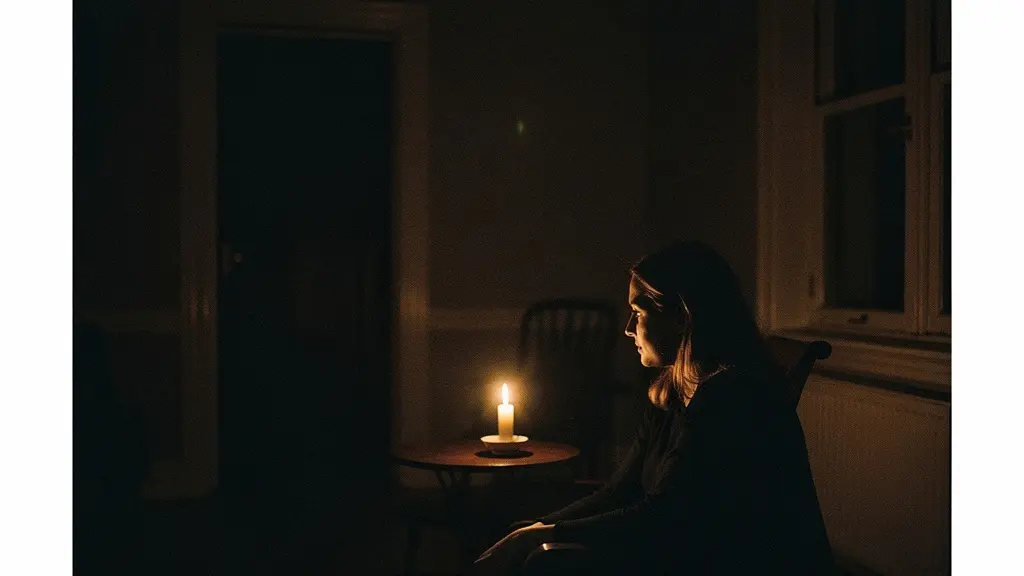
This capability allows the photographer to work with ambient light, preserving the natural mood and atmosphere of a scene. Instead of resorting to a flash, which can destroy the ambiance, a fast prime allows you to capture the soft, warm glow of a candle or the subtle tones of twilight. This commitment to working with available light is a core tenet of the purist’s approach, enabling a more authentic and evocative form of visual storytelling.
How to Build a 2-Lens Prime Kit That Covers 90% of Needs?
Embracing the prime lens philosophy does not mean carrying a heavy bag of a dozen different lenses. On the contrary, the discipline encourages minimalism. A carefully selected two-lens kit can cover the vast majority of photographic situations while forcing you to master two distinct perspectives. The key is to choose a pair that complements each other and aligns with your personal shooting style, creating a system built on intentionality, not just coverage.
The goal is to create a pairing that offers a meaningful shift in perspective, forcing you to make a conscious choice before you even begin shooting. Taping your zoom lens at different focal lengths for a week at a time is an excellent way to discover which perspectives feel most natural to you. This simple exercise provides invaluable insight before you invest a single dollar. For many, the choice revolves around pairing a “context” lens with a “subject” lens.
Several classic combinations have proven effective for photographers across genres:
- The Storyteller’s Duo (28mm + 50mm): This pairs a moderately wide lens for establishing environmental context with a normal lens for focusing on subjects and details. It’s a versatile kit ideal for travel and documentary work.
- The Portraitist’s Pair (35mm + 85mm): A highly popular choice that combines the environmental portrait capability of a 35mm for full-length shots with the beautiful compression and isolation of an 85mm for classic headshots.
- The Perspective Shift Kit (24mm + 135mm): This is a more dramatic pairing for those who want to force creative thinking. The extreme difference between the ultra-wide and telephoto lengths demands significant physical movement and a complete change in compositional approach for each lens.
Ultimately, the perfect kit is deeply personal. Your preference for street photography versus controlled portraits will guide your decision. The goal isn’t to have every focal length, but to deeply understand the two you choose, making your kit a true extension of your creative vision.
Helios 44-2 or Canon L Series: Which Best Serves Artistic Portraiture?
The pursuit of compositional discipline can lead down two very different paths: the quest for optical perfection or the embrace of artistic character. This choice is perfectly encapsulated in the comparison between a modern, clinically sharp lens like a Canon L series prime and a vintage, flawed masterpiece like the Helios 44-2. For the purist, “better” is not always synonymous with “more expensive” or “technically perfect.” Sometimes, the most powerful artistic tool is one with personality.
Canon L series lenses are paragons of modern optical engineering. They are designed to be flawlessly sharp, free of distortion, and to render scenes with uncompromising fidelity. They are predictable, reliable, and exceptionally effective. The Helios 44-2, a Soviet-era lens, is the antithesis of this. It is often soft at the edges, prone to flare, and possesses a unique optical flaw that produces a distinctive “swirly” bokeh. Yet, for artistic portraiture, these “flaws” are its greatest strength. And remarkably, the Helios 44-2 can be found on eBay for under $50, a tiny fraction of the cost of a modern professional prime.
The decision between them comes down to intent. If the goal is a clean, commercial headshot, the Canon L series is the superior tool. But if the goal is to create a portrait with a dreamy, painterly, and unique emotional quality, the Helios is often the more compelling choice. As an analysis of its design notes:
The manufacturers’ goal wasn’t to create swirly bokeh, but that’s what happened – and as artistic photographers, it’s something we can exploit!
– Digital Photography School, Analysis of Helios optical design
This highlights a crucial aspect of photographic discipline: knowing when to prioritize character over clinical perfection. An artist learns to control their tools, and sometimes the most expressive tool is one that is perfectly imperfect.
Why Does Sensor Size Actually Affect Depth of Field?
A deeper technical understanding is a pillar of compositional discipline. One of the most frequently misunderstood concepts in photography is the relationship between sensor size, focal length, and depth of field. Many photographers mistakenly believe that a smaller sensor (like APS-C or Micro Four Thirds) inherently has a deeper depth of field. The reality is more nuanced and is rooted in physics and photographer behavior, not an intrinsic property of the sensor itself.
A 50mm lens is always a 50mm lens, regardless of the sensor it’s attached to. Its optical properties do not change. What changes is the field of view. A smaller sensor simply crops the image circle projected by the lens, making the field of view appear narrower (a “crop factor”). The illusion of a deeper depth of field arises from how a photographer compensates for this crop. To get the same subject framing on a smaller sensor as on a full-frame sensor, you must physically move further away from your subject. This increased subject-to-camera distance is what actually increases the depth of field, not the sensor itself.
Here are the key principles to understand:
- Framing Drives Distance: To achieve the same composition, a larger sensor requires you to be closer to your subject. This closer focusing distance is the primary reason for a shallower depth of field.
- Focal Length is Constant: A lens’s focal length is an immutable optical measurement. The crop factor only affects the apparent field of view, not the lens’s inherent depth of field characteristics at a given distance.
- Circle of Confusion: On a technical level, the “circle of confusion” standard (which defines what is perceived as acceptably sharp) is smaller for smaller sensors. This means that for a given print size, the image from a smaller sensor needs to be enlarged more, making any out-of-focus areas more apparent, which can further complicate direct comparisons.
Mastering your equipment means understanding these underlying mechanics. Knowing that subject distance—a choice you make as the photographer—is the real variable allows you to control depth of field with intent, rather than blaming it on your gear.
Key Takeaways
- Prime lenses are a training tool, not just gear; they enforce compositional discipline through the power of creative constraint.
- The optical simplicity of primes (fewer glass elements) leads to superior micro-contrast and a significant, game-changing advantage in low light.
- Mastering a prime lens means learning to pre-visualize your frame, a fundamental skill separating intentional photographers from reactive ones.
How to Use Long Focal Lengths to Isolate Details in Chaos?
While much of the prime lens discipline is built around wide and normal focal lengths (28mm, 35mm, 50mm), the same principles of intentionality and pre-visualization apply to telephoto primes as well. Using a long focal length like a 135mm or 200mm is not just about bringing distant subjects closer; it is a powerful compositional tool for imposing order on chaos. The key technique is leveraging a phenomenon known as telephoto compression.
Telephoto compression is the optical effect where the distance between foreground, midground, and background elements appears to be reduced. A long lens “flattens” perspective, allowing a photographer to stack layers on top of each other in the frame. This can be used to create dense, graphically complex images from a scene that might look sparse and disconnected to the naked eye. More importantly, it acts as a tool of surgical exclusion.
The narrow field of view of a telephoto lens allows you to actively “delete” distracting elements from your composition. In a busy city street or a cluttered landscape, a long lens can isolate a single compelling detail—a facial expression, a textural pattern on a wall, a reflection in a window—and render the surrounding chaos as a soft, out-of-focus backdrop. This is the ultimate expression of intentional framing: instead of capturing everything, you make a deliberate choice to show only what is essential to your story. It transforms the photographer from a documentarian of a scene into the curator of it.
This entire journey, from understanding optical honesty to mastering telephoto isolation, is the foundation of compositional discipline. By embracing the creative constraints of prime lenses, you are not limiting yourself; you are liberating yourself from lazy habits and building a more intentional, powerful, and personal photographic practice.