Blog
Fine art photography exists at the intersection of technical mastery and personal expression, where the camera becomes a tool for translating inner vision into tangible imagery. Unlike commercial or documentary work, this practice prioritizes the photographer’s creative intent over external expectations, transforming ordinary moments into visual statements that resonate across time and culture.
The journey from casual image-maker to established fine art photographer involves far more than acquiring expensive equipment or mastering exposure settings. It requires developing a unique artistic voice, understanding visual psychology, experimenting with unconventional techniques, and navigating the complex landscape of galleries, exhibitions, and evolving technologies. This comprehensive exploration connects the foundational concepts with practical strategies, offering both emerging and intermediate photographers a framework for deepening their craft and building sustainable creative careers.
What Defines Fine Art Photography?
The boundary between fine art photography and other photographic disciplines often appears blurred, leading to persistent misconceptions about what qualifies as artistic work. At its core, fine art photography is driven by personal expression rather than external assignments—the photographer creates primarily to communicate their unique perspective, not to fulfill a client brief or document objective reality.
This distinction becomes clearer when examining motivation. A wedding photographer captures moments to preserve memories for others, while a fine art photographer might photograph the same ceremony to explore themes of commitment, ritual, or human connection through their own interpretive lens. The subject matter matters less than the intent behind the shutter click.
Market expectations further distinguish these practices. Commercial work typically demands broad appeal and clear messaging, whereas fine art photography often embraces ambiguity, provocation, and niche aesthetic preferences. Collectors and gallery audiences seek work that demonstrates consistent vision and conceptual depth, valuing the photographer’s ability to sustain a coherent body of work over time rather than producing isolated beautiful images.
Developing Your Artistic Vision and Voice
Cultivating a distinctive creative identity represents one of the most challenging yet essential aspects of fine art photography. Your artistic vision functions like a internal compass, guiding decisions about subject selection, composition, processing, and presentation in ways that reflect your authentic perspective rather than trending styles.
Identifying Your Sources of Inspiration
Genuine inspiration rarely arrives fully formed. Most photographers discover their creative roots through sustained attention to recurring themes in their work—perhaps you consistently gravitate toward transitional light, decaying architecture, or moments of human vulnerability. These patterns reveal your innate visual interests and provide raw material for conscious development.
Consider maintaining a visual journal that documents not just your photographs but also paintings, films, music, and life experiences that provoke strong emotional responses. These seemingly disparate influences often converge into cohesive aesthetic directions when you actively examine their common threads.
Translating Concepts into Images
The gap between abstract ideas and concrete photographs frustrates many artists. A photographer might envision exploring « the weight of memory » but struggle to manifest this concept visually. Effective translation requires breaking broad themes into specific visual metaphors—memory might manifest through layered exposures, faded colors, or partially obscured subjects.
Successful fine art photographers often work in series rather than isolated images, allowing thematic exploration across multiple frames. This approach provides room for experimentation while building conceptual coherence that single images cannot achieve.
Balancing Consistency and Evolution
The tension between maintaining a recognizable style and allowing artistic growth challenges photographers throughout their careers. Galleries and collectors value consistency because it demonstrates commitment to a vision, yet creative stagnation threatens both artistic fulfillment and long-term relevance.
The solution lies in viewing your style as a gradually evolving language rather than a fixed formula. Subtle shifts in palette, subject matter, or technique allow growth while preserving the underlying sensibility that makes your work distinctive. Major stylistic pivots can occur, but they typically benefit from clear conceptual justification rather than following fleeting trends.
Creating Powerful Visual Compositions
Understanding how viewers perceive and process visual information transforms composition from intuitive guesswork into deliberate communication. The psychology of visual attention reveals predictable patterns that fine art photographers can harness or intentionally subvert to create specific emotional effects.
The Hierarchy of Visual Attention
Human eyes instinctively follow a predictable scanning pattern when encountering new images, typically beginning with areas of high contrast, sharp focus, or warm colors before exploring peripheral elements. Controlling this visual journey allows photographers to guide viewers through intended narrative sequences or create tension through unexpected focal points.
Effective compositions establish clear primary, secondary, and tertiary elements rather than distributing visual weight evenly. Think of your frame as a stage where the main subject commands attention while supporting elements provide context without competing for dominance.
Leveraging Color for Emotional Impact
Color theory extends beyond basic complementary relationships into sophisticated psychological territory. Saturated warm tones advance toward viewers and convey energy, while desaturated cool palettes recede and suggest contemplation. Fine art photographers often develop signature color approaches—restricted palettes, specific tonal ranges, or deliberate color discordance—that become integral to their visual identity.
Consider how color relationships within your frame create harmony or tension. Analogous color schemes (neighboring hues) feel cohesive and calm, while complementary contrasts generate dynamic energy. Monochromatic approaches remove color as a variable entirely, forcing composition to succeed through form, texture, and tonal relationships alone.
Optimizing Light for Drama
Lighting quality fundamentally shapes mood and dimensionality. Soft, diffused light wraps subjects gently, minimizing texture and creating ethereal qualities, while hard, directional light carves dramatic shadows that emphasize form and create visual tension.
Many fine art photographers gravitate toward transitional lighting conditions—the blue hour’s cool luminosity, window light’s directional softness, or artificial sources mixed with ambient illumination. These complex lighting scenarios offer nuanced possibilities that harsh midday sun or flat overcast conditions cannot provide.
Reviving Pictorialist Techniques
The pictorialist movement, which flourished in the late nineteenth and early twentieth centuries, pursued photography that resembled painting through soft focus, manipulated printing, and romantic subject matter. Contemporary photographers increasingly revisit these approaches, finding renewed relevance in techniques that prioritize emotion over technical sharpness.
Modern digital workflows paradoxically enable easier implementation of vintage pictorialist effects. Photographers can introduce controlled lens aberrations, apply textured overlays during processing, or employ alternative printing substrates that recall gum bichromate or platinum prints. The key lies in understanding the conceptual intent behind historical techniques rather than merely replicating their surface aesthetics.
Avoiding cliché requires thoughtful integration of these approaches with contemporary sensibilities. Soft focus or vignetted edges should serve specific expressive purposes—enhancing dreamlike qualities or directing attention—rather than functioning as generic nostalgia filters. The most successful contemporary pictorialism feels both historically informed and unmistakably current.
Experimenting with Unconventional Methods
Breaking free from standard technical approaches often yields the distinctive visual signatures that separate memorable fine art photography from competent but unremarkable work. Experimentation encompasses everything from modified equipment to unorthodox shooting sequences.
Lens choice profoundly affects visual character. While standard lenses prioritize optical perfection, many artists deliberately select vintage glass for its unique aberrations, character bokeh, or unexpected color rendering. Others physically modify lenses—introducing tilts, removing elements, or adding obstructions—to create signature distortions that become integral to their aesthetic.
Understanding rather than merely accepting lens aberrations unlocks creative possibilities. Chromatic aberration might enhance ethereal qualities, while vignetting can naturally frame subjects. Spherical aberration creates distinctive soft-focus effects that differ fundamentally from simple blur. The distinction between unusable technical failure and intentional artistic effect lies in consistent, purposeful application aligned with your conceptual goals.
Sequencing experimental projects requires patience. Document your modifications, settings, and results systematically to build knowledge about which approaches serve your vision. Not every experiment succeeds, but failed attempts teach as much as triumphs when you analyze what didn’t work and why.
Building a Sustainable Art Career
Transforming artistic passion into viable livelihood demands skills beyond image-making. The contemporary fine art photography landscape offers multiple career paths, each with distinct advantages, challenges, and requirements.
Career Models and Strategic Choices
Some photographers pursue gallery representation, where established galleries handle marketing, sales, and collector relationships in exchange for significant commissions. This model provides credibility, access to serious collectors, and freedom to focus on creation, but requires relinquishing control over pricing, exhibition timing, and often exclusivity within geographic regions.
Others embrace independence, selling directly through personal websites, art fairs, or online platforms. This approach maximizes profit margins and creative control but demands substantial time investment in business operations, marketing, and collector relationship management that many artists find draining.
Hybrid models increasingly prevail—maintaining limited gallery relationships while developing direct sales channels, supplementing art sales with workshops or licensing, or balancing fine art projects with select commercial assignments that align with your aesthetic.
Developing Your Personal Brand
Personal branding for artists differs fundamentally from corporate marketing. Authenticity matters more than polish. Collectors and galleries seek to understand the person behind the images—your inspirations, process, and evolution—not just the finished work.
Effective artist statements avoid pretentious jargon while articulating your conceptual concerns clearly. Social media presence should reflect your actual working process and influences rather than presenting only perfected final images. The goal is building genuine connections with audiences who resonate with your perspective, not maximizing follower counts through algorithmic manipulation.
Optimizing Networking Opportunities
Gallery openings, portfolio reviews, and photography conferences facilitate crucial connections, but effective networking requires strategy beyond simply attending events. Research attendees beforehand, prepare concise articulations of your work, and follow up thoughtfully rather than aggressively promoting yourself to everyone you encounter.
The most valuable relationships often develop gradually through authentic engagement with others’ work. Curators and gallerists remember photographers who ask insightful questions about exhibitions, contribute to artistic conversations, and demonstrate genuine interest in the broader photography community rather than solely self-promotion.
From Studio Setup to Exhibition Planning
Physical workspace and presentation contexts significantly impact both creative process and professional perception. Thoughtful attention to these practical dimensions supports rather than constrains artistic development.
Optimizing Your Creative Environment
Studio design influences workflow efficiency and creative mindset. Wall colors affect how you perceive prints during editing—neutral gray provides the most accurate assessment context, while white walls cause color perception shifts. Flooring choices balance practical concerns (concrete’s durability versus wood’s warmth) with acoustic properties that shape the space’s atmosphere.
Tethering setups enable real-time image review during shooting but require careful cable management to prevent workflow disruptions. Dedicated client areas, when relevant, should feel welcoming without distracting from the primary creative workspace.
Planning Your Exhibition Strategy
First exhibitions represent significant career milestones that require meticulous preparation. Venue selection should align with your work’s scale, aesthetic, and target audience—a raw warehouse suits edgy contemporary work differently than a traditional gallery serves classical approaches.
Wall sequencing transforms individual images into cohesive visual narratives. Consider rhythm, scale variation, and thematic progression rather than simply arranging prints symmetrically. Framing choices communicate as much as the images themselves—minimal frames emphasize contemporaneity, while ornate options suggest traditional fine art positioning.
Timing press releases and opening announcements requires balancing advance notice (allowing schedule clearing) with maintaining momentum (avoiding announcements so early that audiences forget). Most successful openings involve strategic communication beginning six to eight weeks prior, building intensity as the date approaches.
Navigating Emerging Technologies
Technological evolution continually reshapes fine art photography’s possibilities and challenges. Rather than viewing new tools as threats to traditional practice, successful photographers evaluate each innovation for its potential to serve their artistic vision.
Artificial intelligence tools now offer capabilities from style transfer to generative imagery. Some artists integrate these technologies thoughtfully, using AI as a collaborator in their creative process rather than a replacement for human vision. The key ethical and artistic question remains: does the technology genuinely enhance your expressive capacity or simply automate decisions better made through human judgment?
Blockchain technology and NFTs introduced new authentication and distribution models, though the initial speculative frenzy has settled into more sustainable applications. For photographers, these systems offer potential solutions for provenance tracking and limited edition enforcement, though adoption remains selective.
Immersive presentation formats—from large-scale projections to virtual reality experiences—expand beyond traditional flat prints. These approaches suit certain conceptual directions while feeling forced for others. Evaluate new presentation technologies based on whether they fundamentally enhance viewer engagement with your specific work rather than adopting innovations simply because they’re novel.
The eternal challenge involves distinguishing meaningful evolution from temporary trend-chasing. Lasting artistic careers typically demonstrate selective adoption of technologies that genuinely expand expressive possibilities while maintaining core vision, allowing the work to feel both contemporary and timeless.
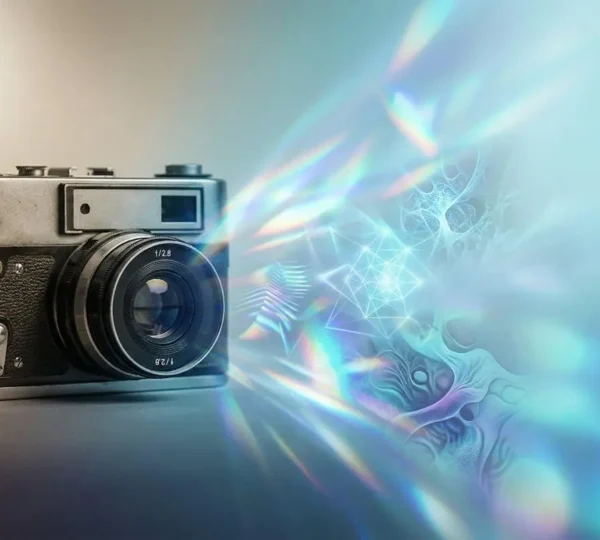
Where Is the Evolution of Fine Art Photography Heading Next?
The future value of fine art photography will not be determined by technology itself, but by how artists and investors leverage it to redefine authenticity, scarcity, and experience. Algorithmic collaboration…
Lire la suite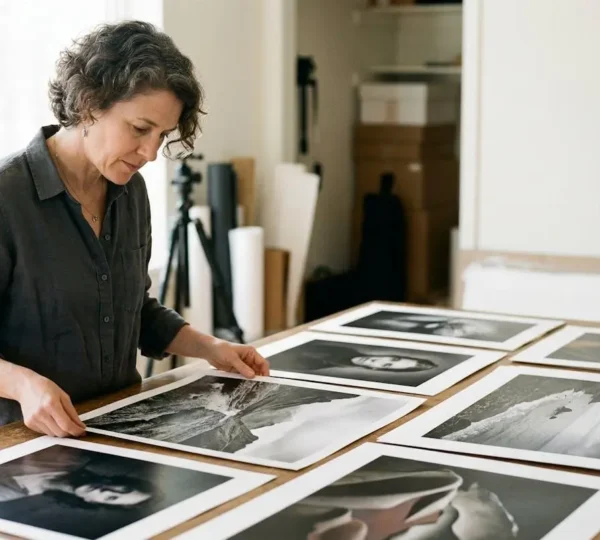
Your First Solo Show: A Strategic Guide to a Career-Defining Exhibition
Your first solo exhibition is not just a party; it is the strategic launch of your artistic brand and a critical career milestone. Success depends on treating the show as…
Lire la suite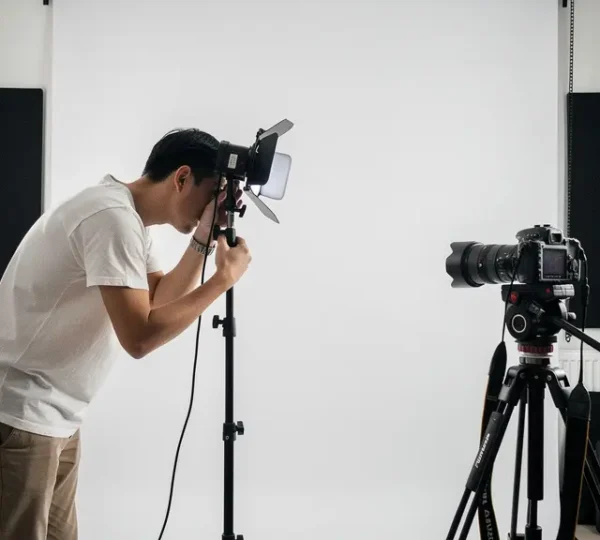
How to Optimize a Small Home Studio for Truly Professional Results
Contrary to popular advice, painting your small studio pure white is one of the fastest ways to destroy professional-level lighting control. Uncontrolled white walls create « light contamination, » filling in your…
Lire la suite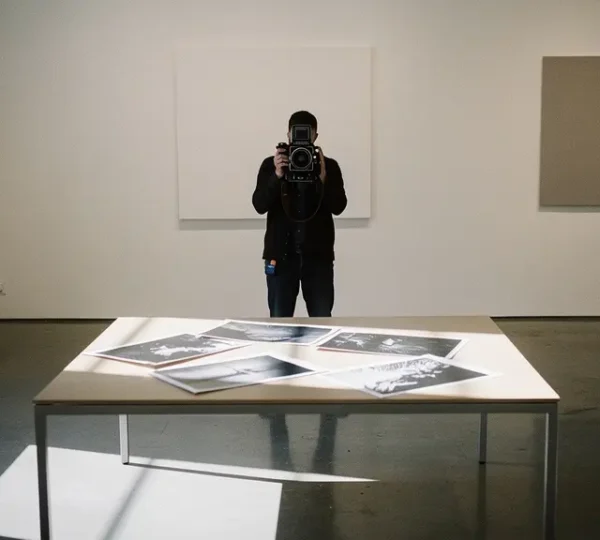
The Unseen Blueprint: What Truly Separates Successful Fine Art Photographers from the Rest
Success in fine art photography isn’t about having the ‘best’ images; it’s about mastering the most compelling narrative. This means shifting focus from just creating work to architecting your entire…
Lire la suite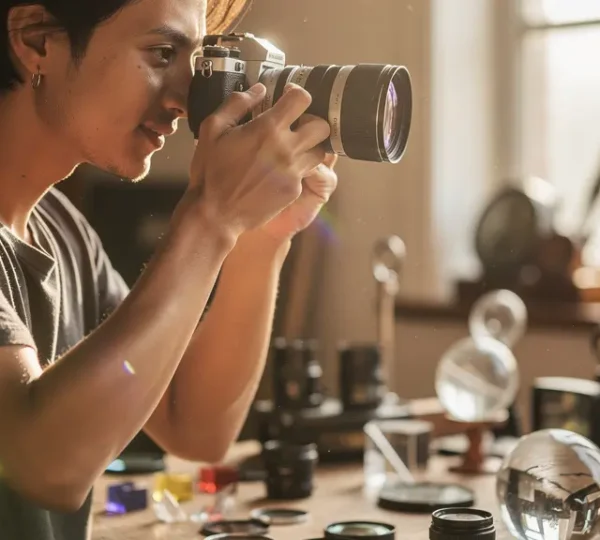
Why Challenge Conventional Optics to Define Your Unique Style?
The search for a unique photographic style doesn’t end with buying a vintage lens; it begins by treating optical « flaws » as a deliberate artistic palette. Technical perfection is often narratively…
Lire la suite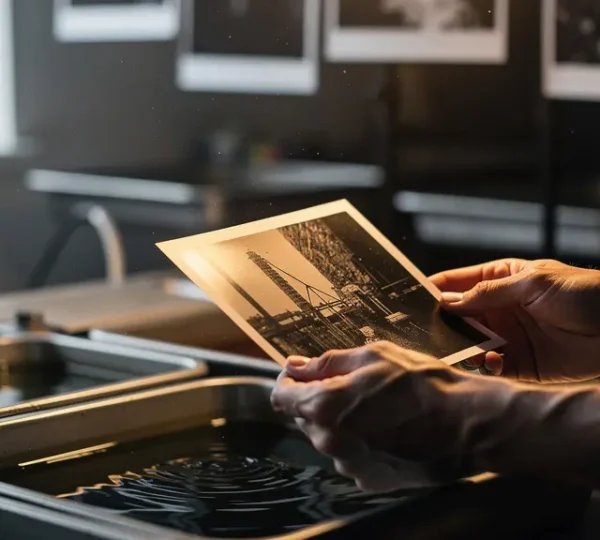
Why Is Pictorialism Making a Comeback in Contemporary Fine Art?
The resurgence of Pictorialism isn’t about nostalgia; it’s a calculated artistic and market-driven choice where intentional craft commands higher value than technical perfection. Authentic pictorial effects, rooted in optical physics…
Lire la suite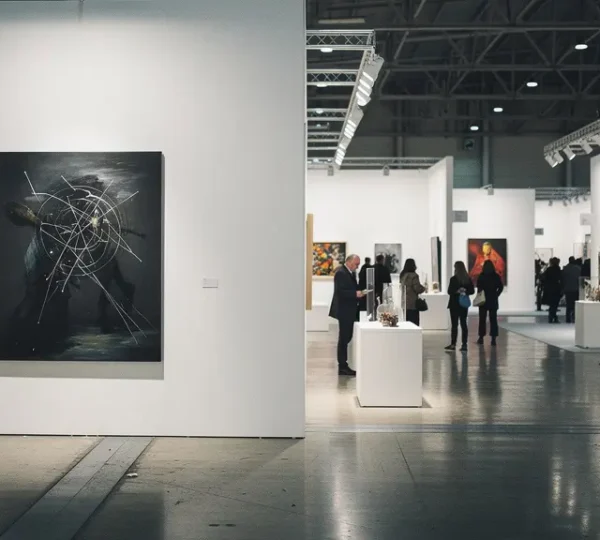
How to Create Visual Impact That Stops Visitors in a Crowded Fair?
Forget everything you know about just ‘displaying’ your art; success in a crowded fair is about psychological warfare for the eyes. Visual clutter is your number one enemy, scientifically proven…
Lire la suite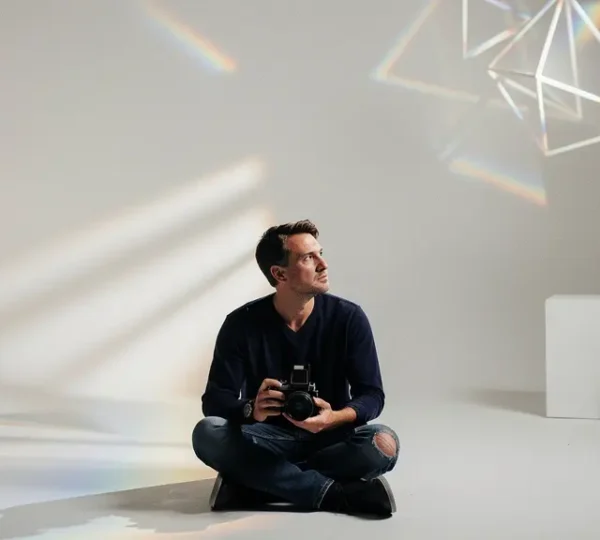
How to Develop an Artistic Vision That Stands Out in a Saturated Market?
Developing a unique artistic vision is not about finding the right subject or trend, but about learning to translate your inner world into a consistent visual language. Mimicking popular aesthetics…
Lire la suite
Fine Art vs. Commercial: Which Approach Defines Your Career Path?
The distinction between a commercial photo and a fine art piece has little to do with subject matter or technical quality; it is forged in conceptual discipline and strategic market…
Lire la suite