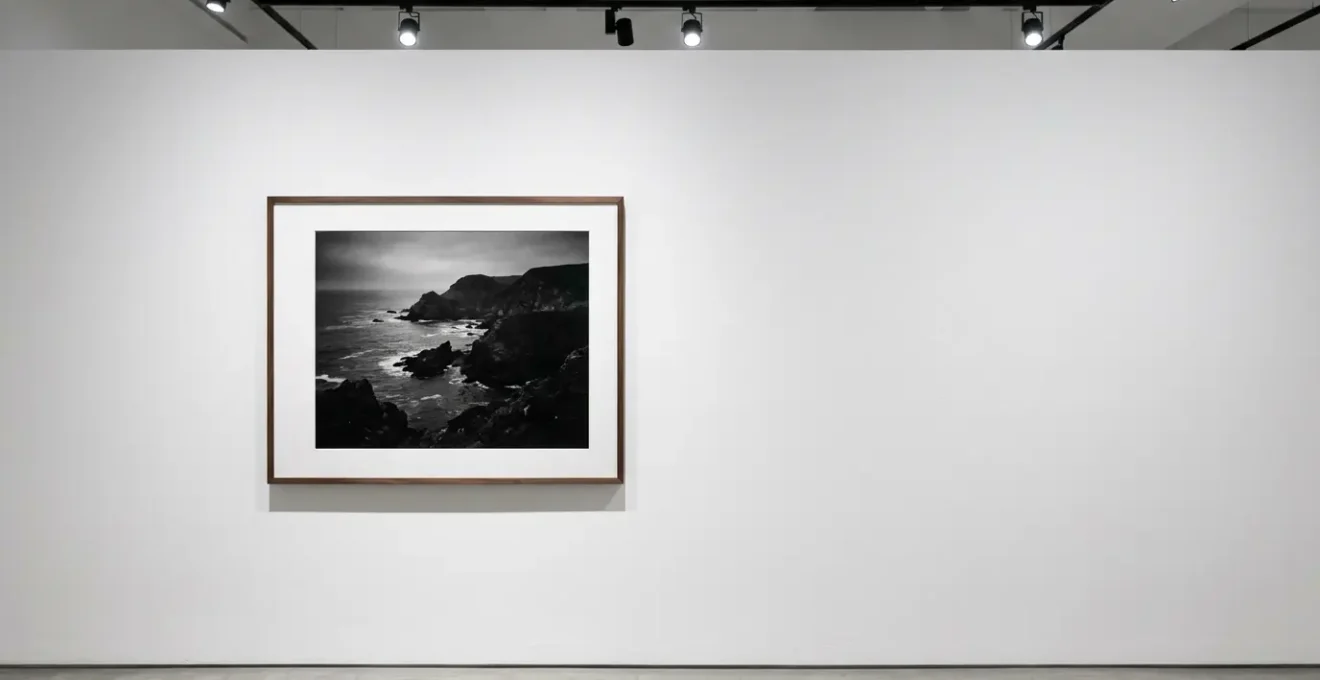
Pigment prints are not just photographs; they are stable, tangible assets whose investment value is rooted directly in their material science.
- They use encapsulated, solid pigments for unparalleled chemical inertness and longevity, resisting environmental degradation.
- Their value depends on museum-grade, OBA-free paper to prevent chemical breakdown and yellowing over time.
- Advanced printing techniques mitigate physical flaws like gloss differential, creating a visually perfect and stable object.
Recommendation: For long-term value, a collector’s primary focus should be on verifying the print’s specific materials and the artist’s process, as these technical details are more critical to its status as an asset than the image itself.
As a collector, you’ve likely faced the dilemma: two prints of the same iconic image, by the same artist, yet one carries a price tag five times higher than the other. The gallery description for the premium piece is filled with terms like “archival pigment print,” while the other is simply a “photographic print.” The common justification revolves around vague assurances that it “lasts longer” or has “better color.” While true, these explanations fail to capture the fundamental difference. They don’t address the core concern of a valuation expert or a serious collector: what makes one a speculative purchase and the other a stable, tangible asset?
The answer lies not in aesthetics alone, but in material science. The distinction between a standard dye-based print and a collectible pigment print is as profound as the difference between a costume jewel and a mined gemstone. One is a fleeting representation; the other is a physical object engineered for permanence. Its value is a direct consequence of its chemical composition, its physical interaction with a specific substrate, and a series of deliberate technical processes designed to combat the natural forces of degradation. Understanding these factors is essential for anyone looking to build a photography collection with lasting worth.
This analysis will deconstruct the technical pillars that elevate pigment prints to the gold standard. We will move beyond marketing terms to explore the specific chemical properties, physical challenges, and historical principles that define their value. By dissecting the science, you will gain the expertise to evaluate a print not just as an image, but as a carefully constructed physical asset, allowing you to invest with confidence and knowledge.
To navigate the key technical and material factors that determine the value of a fine art print, this guide provides a structured breakdown. The following sections will detail everything from chemical stability and paper composition to the subtle craft that defines a truly collectible piece.
Summary: Why Pigment Prints Are the Collector’s Choice
- How Long Will a Pigment Print Last Before Visible Fading?
- How Long Must You Wait Before Framing a Fresh Pigment Print?
- 8-Color vs. 12-Color: Does the Extra Ink Matter for B&W?
- The Gloss Differential Mistake on Heavy Ink Areas
- How to Use Gloss Optimizer to Deepen Blacks on Pigment Prints?
- Why Do Cheap Papers Turn Yellow Within 5 Years of Display?
- The Storage Mistake That Can Devalue Your Collection by 40%
- How to Apply Traditional Darkroom Techniques in the Digital Age?
How Long Will a Pigment Print Last Before Visible Fading?
The longevity of a print is the cornerstone of its archival value. Unlike dye-based inks, where microscopic colorant molecules are dissolved in a liquid and are highly susceptible to breaking down under UV light or ozone, pigment inks are fundamentally different. They consist of microscopic, solid particles of colored material—akin to finely ground minerals—suspended in a liquid carrier and encapsulated in resin. When the carrier evaporates, these stable, solid particles bind to the paper’s surface. This physical structure gives them a profound resistance to environmental degradation.
This chemical inertness translates into extraordinary stability. Rigorous, industry-standard accelerated aging tests provide a clear measure of this permanence. According to comprehensive tests, modern professional pigment inksets demonstrate remarkable longevity, with projections of up to 200 years for color prints and potentially over 400 years for black and white works before any noticeable fading occurs. This is not a marketing claim; it is a scientific benchmark that underpins the print’s viability as a long-term asset. For a collector, this means the object is engineered to outlast generations, preserving the artist’s original intent and the collector’s investment.
How Long Must You Wait Before Framing a Fresh Pigment Print?
A common and costly mistake in handling a freshly made pigment print is framing it too quickly. While the surface may feel dry to the touch within minutes, the ink is undergoing a critical chemical process known as “outgassing.” The liquid carrier for the pigment contains humectants and glycol, which need to fully evaporate from the paper’s fibers. This process is invisible but essential for the print’s long-term stability under glass. Rushing this stage is a critical error that can compromise the artwork.
If a print is sealed in a frame before outgassing is complete, these evaporating solvents have nowhere to go. They can condense on the inner surface of the glazing (glass or acrylic), creating a hazy film that obscures the image and is difficult to clean without dismantling the frame. In a worst-case scenario, this condensation can interact with the print’s surface. To avoid this, archival best practices dictate a necessary curing period. Experts recommend allowing at least 24 hours for a pigment print to cure in a clean, low-humidity environment before it is framed. This patience ensures that only a stable, inert object is sealed behind the glass, protecting both the viewability and the material integrity of the print.
The texture of the paper itself plays a role in this process, as the fibers must fully release the solvent vapors. This waiting period is not a suggestion but a mandatory step in the professional production chain of a collectible-grade photographic object. A print that has been properly cured before framing is a sign of a knowledgeable and careful printer, a key indicator of quality for any collector.
8-Color vs. 12-Color: Does the Extra Ink Matter for B&W?
It may seem counterintuitive that a printer with more color inks—like a 12-color system versus an 8-color one—would produce superior black-and-white prints. The value, however, is not in the “color” itself, but in the expanded tonal subtlety. Advanced printers don’t just add more hues; they add multiple shades of black and grey, such as Light Black, Light-Light Black, and Matte Black alongside the standard Photo Black. This is a game-changer for monochrome photography.
Instead of relying on dithering (using tiny dots of color to simulate a grey tone), the printer can use a dedicated grey ink. This creates exceptionally smooth gradations in highlights and mid-tones, eliminating the graininess or color casts that can appear in B&W prints from less sophisticated systems. This technical capability directly impacts two key metrics of print quality. It reduces metamerism, the phenomenon where a print appears to change color under different lighting conditions. It also dramatically increases the Dmax, which is the measurement of the deepest, richest black a printer-paper combination can produce. A higher Dmax creates a greater tonal range and a more profound sense of depth and contrast in the final image.
With the increased Dmax, wider color gamut, and reduced metamerism provided by the new Epson UltraChrome HD pigment inks…the increased overall permanence of the prints represents a significant contribution to photography.
– Henry Wilhelm, Wilhelm Imaging Research
For a collector, this means a B&W print from a 12-color system is not just visually smoother; it is a more stable and accurate representation of the artist’s vision, holding its neutrality and depth regardless of the viewing environment. This technical superiority is a clear marker of a high-end, collectible print.
The Gloss Differential Mistake on Heavy Ink Areas
When working with glossy, semi-gloss, or luster papers, a common flaw that separates amateur prints from professional ones is “gloss differential.” This is a visible, often distracting, difference in sheen across the surface of the print. The issue arises from the way pigment inks interact with the paper’s surface coating. In heavily inked areas, like deep shadows, the surface you see is essentially a layer of cured resin-encapsulated pigment. In areas with no ink, such as the pure white of the paper or specular highlights, the surface you see is the paper’s own glossy coating.
The problem is that these two surfaces reflect light differently, creating a textural inconsistency. This phenomenon, also known as bronzing, is particularly noticeable when the print is viewed at an angle. According to technical experts, gloss differential occurs in highlight areas where the printer leaves the paper base exposed, contrasting with the sheen of the inked portions. This visual artifact disrupts the illusion of the photograph, drawing the viewer’s eye to the surface of the object rather than the image itself. For a collectible print, where perfection is expected, gloss differential is an unacceptable flaw that significantly devalues the piece.
How to Use Gloss Optimizer to Deepen Blacks on Pigment Prints?
The definitive solution to gloss differential and bronzing is the application of a “Gloss Optimizer” or “Chroma Optimizer.” This is not an ink in the traditional sense, but a transparent resin-based fluid that functions as a clear coat. During the printing process, the printer applies this optimizer over the entire surface of the print, including the areas where no colored ink was laid down. This masterstroke of engineering creates a single, unified top layer with a consistent and uniform sheen from edge to edge.
By sealing the entire print under this micro-thin layer, any textural difference between inked and un-inked areas vanishes. The result is a perfectly smooth, homogenous surface that reflects light evenly. This not only solves the gloss differential problem but also has a secondary benefit: it enhances the perceived depth of the blacks (Dmax). By smoothing the surface, it reduces diffuse reflections and allows the black pigments to absorb light more completely, making them appear richer and deeper. As master printer Jon Cone notes, the effect can be transformative.
The use of Piezography Gloss Overprint completely eliminates bronzing and any trace of gloss differential. When properly applied it is impossible to tell where the ink ends and the paper begins.
– Jon Cone, Cone Editions Press
For a collector, the presence of a perfectly uniform gloss on a print is a hallmark of a high-end, technically superior process. It signifies that the artist or printer has invested in the technology and expertise required to create a flawless photographic object, a key indicator of collectible quality.
Why Do Cheap Papers Turn Yellow Within 5 Years of Display?
The longevity of a pigment print is a partnership between the ink and the paper. Even the most stable pigments will fail if printed on a chemically unstable substrate. The primary culprit behind the rapid yellowing of cheap, non-archival papers is the presence of Optical Brightening Agents (OBAs) and lignin. Lignin is a natural polymer found in wood pulp that is acidic and breaks down over time, causing paper to become yellow and brittle. This is why you see old newspapers turn yellow.
OBAs are chemical additives used to make paper appear “whiter” and “brighter” by absorbing invisible UV light and re-emitting it as visible blue light. However, these agents are notoriously unstable. As B&H Photo explains, OBAs fade over time, causing the paper to lose its artificial brightness and revert to its duller, often yellowish, natural state. This means a print on OBA-rich paper will inevitably and irreversibly change color, usually within just a few years of display. True archival, museum-grade papers are defined by what they lack.
Papers with the museum designation…are made from 100% cotton rag content and have no optical brightener content (OBA). The base stock is acid and lignin free. The coating is acid free. This type offers the most archival option in terms of media stability over time.
– Red River Paper
A collector must always insist on prints made on 100% cotton rag, acid-free, and OBA-free paper. This is not a premium feature; it is the absolute baseline requirement for any print to be considered a collectible, long-term asset. The paper’s composition is as critical as the ink’s chemistry.
Key Takeaways
- Longevity is chemical: The solid, encapsulated nature of pigments provides multi-century stability against environmental factors, forming the basis of the print’s value.
- Paper is the foundation: OBA-free, acid-free, 100% cotton rag paper is a non-negotiable requirement to prevent chemical degradation and preserve the print’s original appearance.
- Process defines perfection: Critical steps like proper outgassing before framing, using gloss optimizers, and correct storage are essential to protecting the print as a physical asset.
The Storage Mistake That Can Devalue Your Collection by 40%
Acquiring a technically perfect, archival pigment print is only half the battle. The single greatest threat to its value over time is improper storage and handling. Even a print engineered to last 200 years can be irreparably damaged in a decade if neglected. Environmental factors like high humidity, temperature fluctuations, and exposure to UV light or acidic materials can trigger chemical reactions that degrade the paper and ink. Protecting your investment requires a disciplined approach to archival storage.
The fundamental principle is to create a stable, chemically inert environment for the artwork. This means isolating it from light, atmospheric pollutants, and, most importantly, any acidic materials that can leach into the paper and cause discoloration and embrittlement. Wood pulp products like standard cardboard, cheap mat boards, or wooden frame backings are the primary enemies of a print collection. Using materials that have passed the Photographic Activity Test (PAT) is the industry standard for ensuring chemical safety.
Your Archival Storage Checklist: Protecting Your Investment
- Use light-tight and acid-free boxes or archival-grade portfolios for storage, with high-quality, acid-free interleaving paper between each print.
- Maintain a stable environment with controlled humidity (ideally 40-50% RH) and temperature, avoiding attics, basements, or areas with direct sunlight.
- Ensure all materials in direct contact with the print—mats, sleeves, backing boards—have passed the Photographic Activity Test (PAT) under ISO 18916.
- When displaying prints, always use UV-filtering glass or acrylic to protect them from the most damaging spectrum of light.
- Never use non-archival materials like standard mat board, foam core, or direct wood backing, as they will leach acid into the print over time, causing irreversible yellowing and damage.
Adhering to these practices is not optional for a serious collector. It is the essential stewardship required to ensure that a valuable asset retains its condition and, therefore, its monetary worth for future generations. A print’s provenance includes its condition, and a history of archival storage is a significant value-add.
How to Apply Traditional Darkroom Techniques in the Digital Age?
The “gold standard” status of pigment prints is not just a function of their superior materials; it is also rooted in their ability to inherit the value-creating principles of the traditional photographic darkroom. In the analog era, a master printer’s work was revered, and the concept of a “limited edition” was a physical reality dictated by the difficulty of creating perfectly matched prints. Today, artists and printers use pigment technology to apply this same philosophy of scarcity and artisanal control to the digital workflow.
A true collectible is not infinitely reproducible. Serious artists use pigment printing to create strictly limited editions, after which the digital file is effectively “retired” for that format. Each print is often signed, numbered, and accompanied by a certificate of authenticity detailing the paper, inkset, and printer used. This documentation is a crucial part of the object’s provenance, directly linking it to the artist’s hand and intent. By deliberately limiting supply, the artist creates the scarcity that is fundamental to market value, mirroring the historical practices of master printmakers like Ansel Adams.
Case Study: Huntington Witherill’s Digital Editioning Philosophy
Professional photographer Huntington Witherill exemplifies the application of darkroom principles to modern printing. As detailed on his site, he creates strictly limited editions for his archival pigment ink prints. He states that “once both Regular and Oversized editions have been sold out…no other archival pigment ink prints of that image will be made.” This self-imposed limitation on production, combined with signed and numbered certificates for each piece, directly mirrors the scarcity model of traditional master prints, creating a framework for long-term collectible value in a digital medium.
When you acquire a limited-edition pigment print, you are not just buying an image; you are buying a stake in a finite body of work. This intentional application of traditional scarcity models to modern technology is the final element that cements the pigment print’s status as the gold standard for collectible photography. It bridges the gap between digital convenience and the long-standing art market principles of rarity and authenticity.
To build a collection of lasting value, a collector must therefore become an educated connoisseur of materials and process. When considering an acquisition, ask the artist or gallery about the specific paper, the inkset, and the editioning protocol. This knowledge is your most powerful tool for distinguishing a beautiful picture from a true, investment-grade photographic asset.