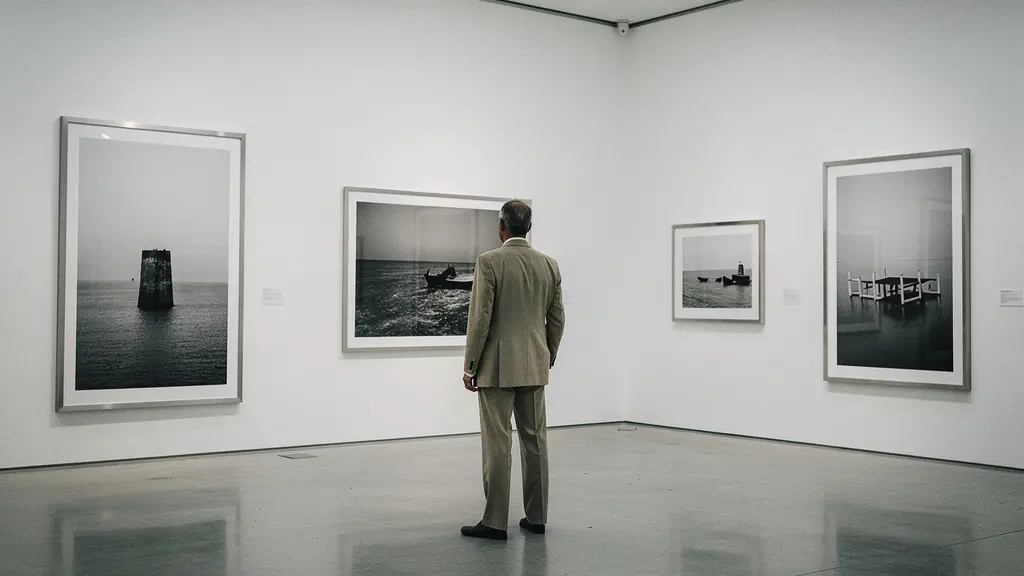
The value of investment-grade photography is driven less by the image and more by its verifiable data trail.
- It involves rigorous due diligence on authenticity and a data-driven analysis of auction records.
- A collection’s value is maximized through a cohesive curatorial strategy, not random acquisitions.
Recommendation: Treat fine art photography as a distinct asset class, applying the same financial discipline you would to stocks or real estate.
For the discerning investor, the art market—particularly photography—often appears opaque, a realm governed by subjective taste rather than concrete value. This opacity can be a significant barrier for high-net-worth individuals accustomed to data-driven decisions in their portfolios. Conventional wisdom advises to ‘buy what you love’ or focus solely on limited edition sizes, treating the acquisition as a matter of personal affinity. While there is merit in appreciating the art you own, this approach is fundamentally flawed for strategic portfolio diversification.
The most astute collectors and art funds operate on a different paradigm. They treat photography not as decoration, but as a tangible financial asset class. Its potential for appreciation is unlocked not by aesthetic appeal, but by a rigorous, data-driven due diligence process that assesses factors from provenance and authenticity to market mechanics and curatorial context. This mindset shift is critical: it transforms the act of buying art from a speculative gamble into a calculated investment.
This guide will deconstruct the key financial and historical metrics that separate a decorative print from an investment-grade asset. We will move beyond the superficial to explore the structural pillars that support long-term value: artist trajectory, authenticity verification, strategic curation, and market analysis. By adopting this financial advisor’s perspective, you will gain the tools to identify creations with genuine potential for capital appreciation and build a collection that is not only culturally significant but also financially sound.
To navigate this complex market, we will dissect the core principles of art investment. The following sections provide a structured framework for evaluating photographic works as you would any other high-performance asset in your portfolio.
Summary: A Framework for Investing in Fine Art Photography
- Why Do Certain Prints Appreciate by 200% While Others Stagnate?
- How to Verify Authenticity Documents Before Buying a $5,000 Print?
- Blue Chip vs. Emerging Artists: Which Risk Profile Suits Your Portfolio?
- The Storage Mistake That Can Devalue Your Collection by 40%
- How to Curate a Cohesive Collection That Attracts Future Buyers?
- How to Use Auction Records to Determine Fair Market Price?
- Why Is the Paper Trail More Important Than the Image for History?
- How to Navigate Art Fairs to Acquire Investment-Grade Photography?
Why Do Certain Prints Appreciate by 200% While Others Stagnate?
The stark divergence in the financial trajectory of photographic prints is not a matter of luck; it is a function of specific, identifiable value drivers. While the broader art market shows robust health—with sales volumes for photography in 2023 being the strongest since tracking began in 2015—not all works participate equally in this growth. The key to understanding this discrepancy lies in analyzing the artist’s career trajectory and their institutional validation.
An artist’s market is built on a foundation of critical recognition and historical significance. This includes solo exhibitions at major museums, inclusion in seminal group shows, and acquisition by prestigious public and private collections. These events are not mere accolades; they are powerful market signals that solidify an artist’s place in the art-historical canon, reducing perceived risk for investors. For example, the recent sale of Peter Hujar’s self-portrait for a record-breaking $252,000 was the culmination of decades of posthumous curatorial and critical re-evaluation, cementing his status as a key 20th-century figure.
Furthermore, the scarcity principle is paramount. This extends beyond simple edition size. Factors to consider include: the number of artist’s proofs (APs), the rarity of a specific image within the artist’s oeuvre, and whether the print is vintage (printed by the artist near the time the negative was made) or modern. A vintage print by a master photographer is exponentially more valuable than a later posthumous edition, even if the image is identical. This is because it represents a direct link to the artist’s original creative moment, a historical artifact in its own right. Understanding these nuances is the first step in differentiating a stagnant decorative piece from an appreciating asset.
How to Verify Authenticity Documents Before Buying a $5,000 Print?
In the world of tangible assets, a verifiable paper trail is everything. For an investment-grade photograph, the Certificate of Authenticity (CoA) and associated provenance documents are not supplementary materials; they are integral components of the asset itself. An artwork with questionable or incomplete documentation is a high-risk liability, regardless of its aesthetic appeal. The process of verification requires a level of forensic due diligence similar to that used in any high-value transaction.
A legitimate CoA should be signed by the artist or, for posthumous works, a recognized and official estate representative. However, a signature alone is insufficient. You must verify the legitimacy of the issuing entity. Is the gallery that issued the certificate still in operation? Does it have a strong reputation? Is the work’s information consistent with the artist’s catalogue raisonné—the definitive, scholarly listing of all their known works? Any discrepancies or gaps in this documentation should be considered a major red flag.
The physical examination of the print and its accompanying documents is crucial for identifying an asset with strong provenance. This is where an investor’s eye for detail becomes paramount, scrutinizing every piece of the historical record.
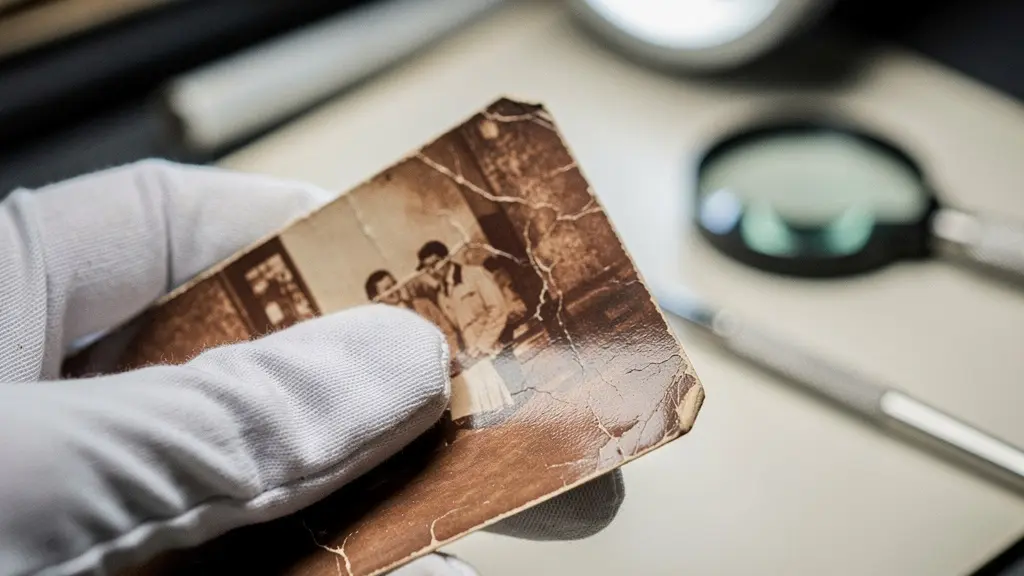
As this detailed examination suggests, provenance is constructed from multiple layers of proof. Original gallery invoices, exhibition labels on the verso (back) of the frame, and a clear, unbroken chain of ownership are all data points that contribute to the work’s financial value. An unexplained gap of several decades in an artwork’s history, for instance, significantly increases risk and diminishes its investment potential. For any print, especially one commanding a price of $5,000 or more, this level of scrutiny is non-negotiable.
Action Plan: The Authentication Due Diligence Checklist
- Verify the Certificate of Authenticity is signed by the artist or their official estate representative.
- Confirm the work appears in or is pending inclusion in the artist’s catalogue raisonné.
- Check for original gallery invoices and exhibition labels on the verso of the artwork.
- Ensure the print has a traceable provenance with no unexplained gaps in its ownership history.
- Cross-reference and verify the legitimacy of the issuing gallery or any authentication entity.
Blue Chip vs. Emerging Artists: Which Risk Profile Suits Your Portfolio?
Just as in equity markets, the art market offers a spectrum of risk and reward profiles. Aligning your art acquisitions with your overall portfolio’s risk tolerance is a cornerstone of sophisticated asset management. The primary distinction lies between investing in “Blue Chip” artists versus “Emerging” talent. Each category serves a different strategic purpose and carries a distinct financial profile.
Blue Chip artists are the established masters of the medium—names like Ansel Adams, Cindy Sherman, or Andreas Gursky. Their markets are characterized by high liquidity, extensive auction histories, and global recognition. Investing in a Blue Chip work is a capital preservation strategy. While the potential for explosive growth is limited, these assets offer stability and are less susceptible to market downturns. They function as the ‘blue-chip stocks’ of an art portfolio, providing a solid, reliable foundation.
Conversely, emerging artists represent the high-growth, high-risk segment of the market. These are contemporary practitioners who are gaining critical attention but do not yet have extensive institutional validation. The potential for returns can be astronomical, but the risk of capital loss is equally high. This segment is booming, as ArtTactic reports that images selling under $5,000 increased by 36% from 2022 to 2023. This indicates a vibrant primary market but also low liquidity on the secondary market. A balanced portfolio may allocate a smaller, calculated percentage to this category, akin to venture capital investments.
The following table breaks down the risk-return dynamics, providing a clear framework for asset allocation within your photography collection.
| Category | Risk Level | Typical Returns | Market Liquidity |
|---|---|---|---|
| Blue Chip Artists | Low | 3-8% annually | High – immediate buyers |
| Mid-Career Re-evaluation | Medium | 10-25% annually | Moderate – specialized collectors |
| Emerging Artists | High | -50% to +200% | Low – limited secondary market |
The Storage Mistake That Can Devalue Your Collection by 40%
Acquiring an investment-grade photograph is only the first step; preserving its value is an ongoing commitment that requires technical precision. The single most destructive factor for a photographic print is improper storage. Environmental fluctuations, exposure to light, and acidic materials can cause irreversible damage—such as fading, discoloration, and paper degradation—potentially erasing up to 40% of an artwork’s market value. This is not just a conservation issue; it is a direct threat to your capital.
Professional art storage is a science. The two most critical variables are relative humidity (RH) and temperature. High humidity promotes mold growth and can cause emulsions to become sticky, while low humidity can make prints brittle. Leading institutions have exacting standards; for instance, the National Science and Media Museum maintains photographs at 16-18°C and 40-45% relative humidity. Stability is just as important as the specific numbers; frequent fluctuations in temperature and RH cause the paper fibers to expand and contract, leading to physical stress and damage over time.
Furthermore, all materials that come into contact with the artwork must be of archival quality. This includes mat boards, which should be 100% cotton rag and acid-free, and framing glass, which should be UV-filtering acrylic to prevent light damage. As an example of institutional best practice, the Museum of Modern Art (MoMA) utilizes specialized cold rooms for its color works, with some areas maintained at a precise 40°F and 40% RH. While such conditions may be extreme for a private collector, they underscore the seriousness with which preservation is treated at the highest level. Ignoring these principles is akin to leaving a luxury automobile exposed to the elements; the asset will inevitably and rapidly depreciate.
How to Curate a Cohesive Collection That Attracts Future Buyers?
A collection with a strong, defensible intellectual argument is exponentially more valuable than one based on a loose theme.
– Art Market Research, High Net Worth Individual Collection Analysis 2024
A random assortment of valuable prints is merely an inventory; a curated collection is a distinct asset in itself. The most valuable collections are those built around a cohesive and intellectually rigorous theme. This “curatorial alpha” is what transforms a group of individual works into a singular entity with a value greater than the sum of its parts. Future buyers—be they institutions or other high-level collectors—are not just acquiring objects; they are acquiring a vision, a narrative, and a piece of connoisseurship.
A strong collecting theme could be focused on a specific period (e.g., modernist photography from 1920-1940), a particular school (e.g., the Düsseldorf School of Photography), a technical process (e.g., platinum-palladium prints), or a conceptual thread (e.g., the exploration of identity in self-portraiture). The theme provides a narrative that demonstrates expertise and foresight, signaling to the market that the collection was assembled with intent and knowledge, not just capital. This intellectual framework makes the collection more desirable and, consequently, more liquid.
Building such a collection is a long-term discipline. Indeed, research shows that collectors with over 20 years of experience own an average of 110 works, compared to just 14 for new collectors. This difference in scale reflects a deep, sustained engagement with a chosen theme, allowing for the acquisition of works that create a dialogue with one another. A new acquisition should not only be valuable on its own but should also enhance the meaning and value of the other works in the collection. This synergy is the ultimate goal of strategic curation and the key to attracting the most serious future buyers.
How to Use Auction Records to Determine Fair Market Price?
Establishing the fair market price for a photographic work is an exercise in data analysis, not guesswork. Auction records, accessible through databases like Artnet or Artprice, are the most transparent source of pricing information. However, interpreting this data requires an understanding of specific market mechanics. Simply looking at a single high-profile sale is misleading; a comprehensive analysis of an artist’s auction history over a 24-36 month period is necessary to establish a reliable price baseline.
An investor must look beyond the headline-grabbing prices. While the photography auction market has seen modest growth overall, it’s crucial to note its performance relative to other categories. From 2005 to 2024, photography sales values increased by just over 3 percent, while prints and multiples grew by 145.8 percent. This disparity underscores the importance of granular analysis. A savvy investor dissects the data for a specific artist or series, rather than relying on broad market trends. The goal is to identify artists who are outperforming the market average.
The process involves methodical research, comparing auction results for similar works by the same artist while accounting for variables like size, year, condition, and provenance. This is how an investor moves from subjective appreciation to objective valuation.
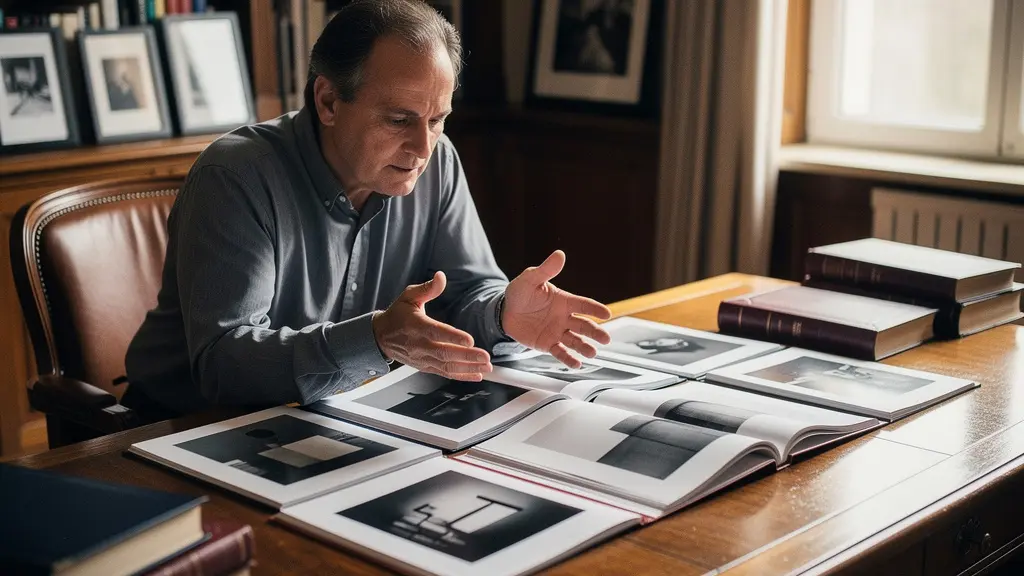
To accurately decode auction results, one must be fluent in the language of the auction house. Key metrics provide insight into market demand, stability, and potential price ceilings. The table below defines these essential terms.
| Metric | Definition | What It Reveals |
|---|---|---|
| Hammer Price | Final bid accepted by auctioneer | Raw market demand |
| Price with Premium | Hammer + buyer’s premium (typically 25%) | Total buyer cost |
| Median Price Range | Middle value over 24-36 months | Stable market value |
| Bought-In Rate | Percentage of lots unsold | Market ceiling indicators |
Why Is the Paper Trail More Important Than the Image for History?
The documents—old invoices, letters from the artist, gallery labels, customs stamps—tell the artwork’s life story. A print owned by a famous person or included in a legendary exhibition has a richer narrative, and that narrative has quantifiable financial value.
– Nora Kennedy, Sherman Fairchild Conservator, Metropolitan Museum of Art
In the financial assessment of a photographic work, the image is the starting point, but the provenance—the documented history of ownership—is what ultimately anchors its value. This “paper trail” provides the irrefutable evidence of an artwork’s significance and authenticity. For an investor, it is the equivalent of a company’s audited financial statements. A beautiful image with no history is an object of speculation; a well-documented image is a historical asset with a defensible valuation.
Each element of the paper trail adds a layer of value. A gallery label from a seminal 1970s exhibition, for example, proves the work’s participation in a key art-historical moment. An invoice showing it was once owned by a famous collector or celebrity adds a “trophy” factor that significantly boosts desirability. These are not just interesting anecdotes; they are quantifiable narrative assets that directly impact what a future buyer is willing to pay. The richer and more complete the story told by the documents, the more secure the investment.
This principle also applies to broader market narratives. For example, the art world is currently undergoing a major historical re-evaluation of female artists. As a result, works by previously undervalued women are appreciating at a faster rate than the market average. This is a narrative shift with a direct financial impact, and the data reflects it: Female artists’ works reached 44% of HNWI collections in 2024, a significant increase from 33% in 2018. Owning a work that is part of such a compelling and timely narrative adds a powerful layer to its investment case.
Key Takeaways
- The financial value of a photograph is determined more by its verifiable data (provenance, artist trajectory, market metrics) than its aesthetic qualities.
- A disciplined investment approach requires rigorous due diligence on authenticity, precise environmental control for preservation, and a clear understanding of auction data.
- The most valuable collections are built with a cohesive curatorial strategy, creating a narrative that elevates the portfolio’s worth beyond the sum of its individual parts.
How to Navigate Art Fairs to Acquire Investment-Grade Photography?
Art fairs like Paris Photo, The Photography Show by AIPAD, or the photo sections of Art Basel are the primary marketplaces for acquiring high-caliber works. However, for the strategic investor, a fair is not a shopping excursion; it is the execution phase of a pre-planned acquisition strategy. Arriving without a plan is the quickest way to overpay or make an impulsive, emotionally-driven purchase that does not align with your collection’s goals.
The work begins weeks before the fair opens. The most sought-after pieces are often sold or placed on hold before the general public even enters. Your first step is to get on the preview lists of galleries whose programs align with your collecting theme. By studying the PDF catalogs they send in advance, you can identify target acquisitions and initiate contact with the gallerist to express interest or place a reserve. The VIP preview day is not for discovery; it is for finalizing acquisitions and for in-person inspection of works already vetted.
Within the fair, booth layout provides valuable data. Galleries often place works by their highest-priority artists in the most prominent positions. A solo booth dedicated to a single photographer is a strong signal of the gallery’s confidence in that artist’s market. While the environment is dynamic, it’s also a place where negotiation is possible, especially if you are acquiring multiple works or making a purchase on the final day. Remember, your leverage comes from being an informed, decisive buyer, not a casual browser. This strategic approach is also essential as the market digitizes, with the online art market projected to reach $19.25 billion by 2033, making remote, data-driven decisions even more common.
- Register for gallery preview lists to receive PDF catalogs in advance.
- Place holds or reserves via email before the fair opens to secure priority.
- Attend VIP preview days to finalize purchases before the general public arrives.
- Identify solo photographer booths as strong signals of gallery and market confidence.
- Note the placement of works within booths to gauge the gallery’s priorities and the artist’s status.
- Consider negotiating for multiple works or on the fair’s final day for potential leverage.
To truly diversify your portfolio with tangible assets, begin applying this rigorous, data-focused methodology to your next art acquisition. Treat it with the same financial discipline as any other asset class.