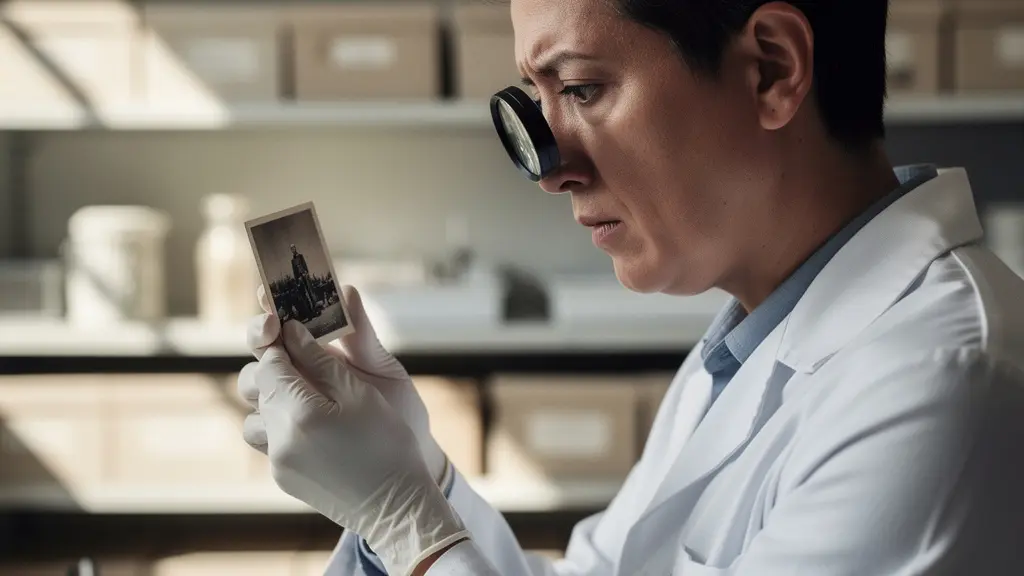
Acceptance into a permanent collection is not an artistic judgment but a technical validation of material stability.
- Non-archival materials, including acidic papers and unstable inks, actively destroy your work over time, guaranteeing its future rejection.
- Procedural compliance, from print signing (graphite pencil only) to digital file migration (a 3-5 year cycle), is mandatory and auditable.
Recommendation: Treat these standards not as guidelines, but as the fundamental manufacturing specifications for creating a collection-worthy object.
The aspiration to have one’s work enter a museum’s permanent collection is a significant career milestone for any photographer. It signifies a transition from contemporary creator to an artist with a place in historical record. However, this transition is often misunderstood. It is not governed by aesthetic merit alone. Before a curator ever assesses the artistic value of a piece, a registrar assesses its material viability. Many artists believe that using “archival” materials is sufficient, but this is a dangerously simplistic view. The reality is a rigid framework of standards where non-compliance is absolute.
The core principle of museum acquisition is permanence. The institution is making a commitment to preserve an object in perpetuity. Therefore, any object that introduces risk to itself or the collection is an unacceptable liability. This document does not offer tips; it outlines the mandatory, non-negotiable protocols. It addresses the fundamental question of why some works are deemed physically worthy of preservation and why others, regardless of their artistic importance, are relegated to ephemera. Adherence to these standards is the foundational requirement for consideration. Failure to comply is not an artistic choice; it is a structural disqualification.
This guide will detail the specific technical requirements that must be met. We will proceed by examining the material science of prints, the procedural mandates for handling and identification, and the long-term strategies for both physical and digital preservation. Each section addresses a common point of failure that leads to deaccession risk or outright rejection at the acquisition stage.
Summary: A Protocol for Institutional-Grade Photographic Archiving
- Why Do Cheap Papers Turn Yellow Within 5 Years of Display?
- Why Pigment Prints Are the Gold Standard for Collectible Photography?
- Why Does Non-Archival Mat Board Destroy Your Print in 10 Years?
- How to Perform the pH Pen Test on Your Storage Materials?
- Pencil or Ink: Which Signature Method Is Accepted by Major Archives?
- The Humidity Error That Causes Irreversible Mold on Gelatin Prints
- When to Migrate Your Digital Archives to New Hard Drive Formats?
- The Estate Mistake of Locking Digital Assets Without Passwords
Why Do Cheap Papers Turn Yellow Within 5 Years of Display?
The yellowing and embrittlement of paper is not a passive, unavoidable consequence of aging; it is an active chemical process known as acid hydrolysis. The primary culprit in inexpensive, mass-produced papers is lignin, a natural polymer found in wood pulp. When exposed to light and atmospheric pollutants, lignin breaks down and releases acids. These acids then attack the cellulose fibers that constitute the paper’s structure, causing them to become weak, brittle, and discolored. This is not a slow, gentle decline; it is a rapid and catastrophic failure of the substrate.
Conversely, archival-grade papers are manufactured from 100% cotton rag or alpha-cellulose, which are naturally lignin-free and have a neutral or slightly alkaline pH. These materials are chemically stable. As demonstrated in preservation protocols used by major institutions, the difference in stability is not subtle. The Smithsonian Institution Archives’ preservation program, which mandates acid-free storage, confirms that lignin-based papers show significant, measurable deterioration over 5-year periods compared to their cotton rag counterparts. Choosing a non-archival paper is, in effect, building an artwork on a foundation programmed to self-destruct.
The environment exacerbates this process. High humidity acts as a catalyst, accelerating the acid hydrolysis. This is why institutional standards are absolute: the paper substrate must be inherently stable, as environmental controls can only slow down, not halt, an inherent chemical vice. For a work to be considered for a permanent collection, its base material must demonstrate intrinsic, long-term chemical inertness. Any paper containing lignin fails this fundamental test.
Why Pigment Prints Are the Gold Standard for Collectible Photography?
The distinction between pigment prints and other forms of photographic output, such as chromogenic or dye-sublimation prints, is fundamental to their archivability and value. The difference lies in the physical nature of the image-forming material. In a dye-based print, colored liquid is absorbed into the paper fibers. These dyes are organic molecules that are inherently susceptible to fading from UV light exposure and color shifting from atmospheric pollutants (a phenomenon known as “gas fading”). They are chemically fugitive.
A pigment print, by contrast, is formed by depositing microscopic, encapsulated particles of inert, solid pigment onto the surface of the paper. These are not absorbed; they sit on top of and are bonded to the substrate. Pigments are, by nature, far more stable. They are essentially microscopic particles of finely ground, colored material with a much greater resistance to UV degradation and environmental factors. This results in a print with significantly higher lightfastness ratings, often projected to last over 100 years without noticeable fading, a standard dye-based prints cannot meet.
This structural difference is a key factor in museum acquisitions. The longevity and stability of the image are paramount. A curator acquiring a work for a permanent collection must have confidence that its appearance will remain unchanged for generations. The physical presence of pigment particles also lends a specific texture and depth to the print surface, which is a valued aesthetic quality. The choice of pigment printing is a declaration that the artist is concerned with the long-term physical integrity of the object, a prerequisite for any serious institutional consideration.
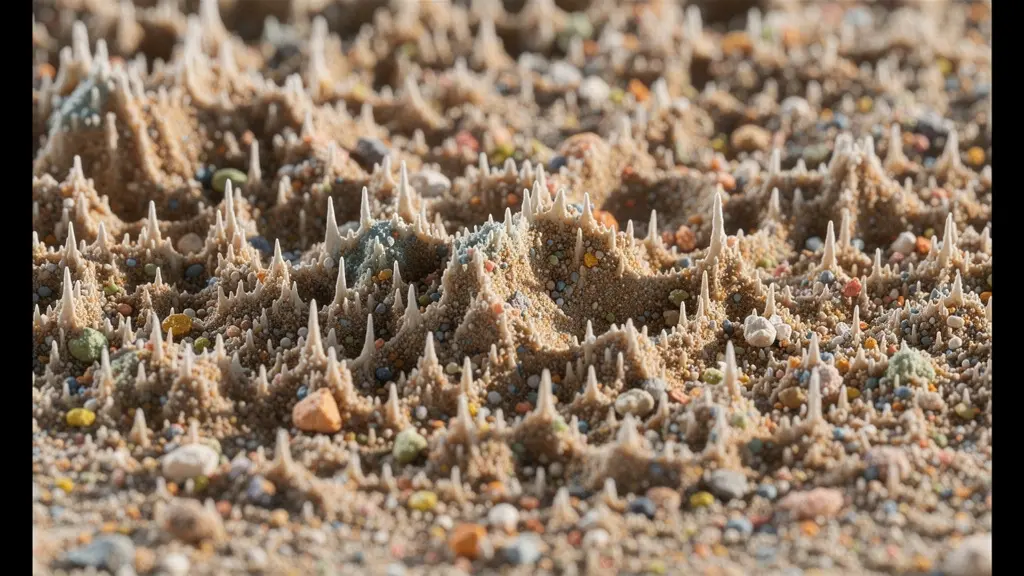
As this detailed view of a print surface shows, the pigment particles create a physical, three-dimensional landscape on the paper. This is the visual evidence of a stable, particulate image, as opposed to a chemically volatile, absorbed dye. This is the structure that collection committees look for.
Why Does Non-Archival Mat Board Destroy Your Print in 10 Years?
Evidence of the structure, development, mission, and functions of the museum over time
– Society of American Archivists, Museum Archives Guidelines
A common and catastrophic error is the framing of an archivally sound print with non-archival materials. The most frequent offender is the mat board. Standard mat board, like cheap paper, is made from wood pulp and is rich in lignin. When this acidic material is placed in direct contact with a photographic print, a process called acid migration occurs. The acids from the mat board will literally “bleed” into the stable, neutral-pH paper of the photograph. This contamination is insidious and irreversible.
Over a period of as little as 5 to 10 years, this will cause a distinct, permanent yellow or brown stain on the print where it was in contact with the mat, a condition known as “mat burn.” This is not a surface stain; it is a chemical alteration of the paper fibers of the artwork itself. It constitutes permanent damage. Any work presented for acquisition showing evidence of mat burn is immediately disqualified, as it demonstrates a failure in basic archival handling and a compromised physical state.
The only acceptable practice is the exclusive use of 100% archival-quality mat board, often referred to as “museum board” or “rag board.” This material is made from cotton fiber, is naturally acid-free and lignin-free, and is typically buffered with calcium carbonate to provide an alkaline reserve, further protecting against any future acid contamination from the environment. As guidance from The UK National Archives’ collection care program emphasizes, archival quality enclosures are not a luxury but an essential component for preventing such damage. The framing package must be considered an extension of the artwork’s own structure, and every component must meet the same archival standard.
How to Perform the pH Pen Test on Your Storage Materials?
Verifying the archival quality of materials is not a matter of trust but of empirical testing. While reputable suppliers provide specifications for their products, it is a standard archival procedure to independently verify the pH of papers and boards that will come into contact with artworks. The most common tool for this on-site assessment is the pH testing pen. This pen contains a chemical indicator, typically chlorophenol red, which changes color in response to the pH level of the surface it touches.
A purple or blue mark indicates an alkaline or neutral pH (typically a pH of 6.8 or higher), which is safe for archival storage. A yellow or clear mark indicates an acidic surface (below pH 6.8), which is unacceptable and will cause acid migration and damage over time. This test provides immediate, visible confirmation of a material’s suitability. However, it is critical to note that this test only measures surface pH. It does not detect the presence of lignin, which, as established, will break down and create acid in the future. A material must be both acid-free and lignin-free to be truly archival.
The procedure for testing is straightforward but must be executed with care to avoid damaging any valuable materials. It is a fundamental skill for anyone managing a collection of works on paper and a mark of professionalism. The following protocol must be observed.
Your action plan: pH Testing Protocol for Archival Materials
- Material Acclimatization: Ensure all papers and boards are at room temperature and are completely dry before beginning the test to ensure an accurate reading.
- Test Location: Perform the test only on a small, inconspicuous area of the material, such as a corner that will be trimmed, or preferably on a dedicated sample scrap. Never test on the artwork itself.
- Application: Apply the pH pen to the surface using light, consistent pressure with minimal contact. A small dot or a short line is sufficient. Over-saturating the area can lead to inaccurate results.
- Observation and Documentation: Observe the color change immediately. Document the result for your material inventory records. A yellow result signifies immediate rejection of the material.
- Interpretation Limitation: Remember that a passing (purple) result only confirms the current surface pH. It does not confirm the absence of lignin, which requires manufacturer certification.
Pencil or Ink: Which Signature Method Is Accepted by Major Archives?
The method used to sign a photographic print is not an aesthetic choice; it is a critical archival decision with permanent consequences. The institutional standard is unequivocal: signatures and any other markings must be made with a soft graphite pencil. The use of ink, regardless of its advertised “archival” quality, is strictly forbidden for any marking intended to be permanent and in contact with the artwork.
The rationale is based on principles of chemical stability and reversibility. Graphite is a stable form of carbon. It is chemically inert and does not react with paper fibers or the environment. It sits on the surface of the paper and becomes physically embedded in its fibers, making it exceptionally permanent and difficult to alter without leaving obvious evidence. Crucially, as the Canadian Council of Archives explicitly mandates for handling documents, pencil can, in a worst-case scenario of error, be physically removed by a trained conservator, even if with difficulty. Ink cannot.
Ink, conversely, is a liquid that is absorbed into the paper fibers. Even “archival” inks contain complex organic dyes or pigments suspended in solvents and binders. These components can be acidic, can fade over time at different rates than the photograph itself, and, most critically, can bleed through the paper over decades, causing a permanent stain on the reverse or even through to the image. An ink signature is an irreversible chemical alteration to the artwork. It introduces an unknown variable, and archives eliminate variables. Using ink to sign a print is considered an act of poor archival practice and can be a point of contention during acquisition review.
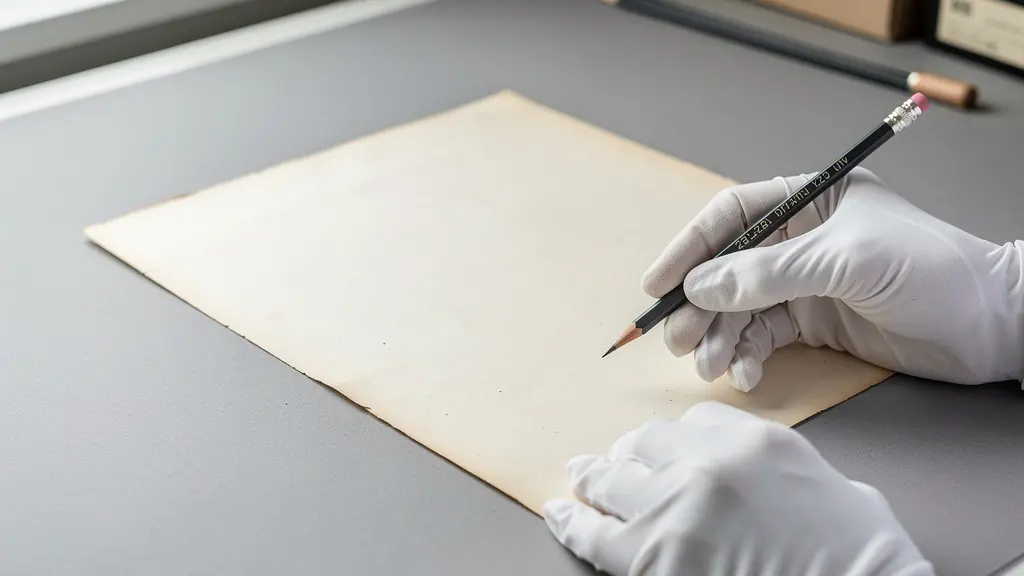
This image depicts the correct institutional procedure: a gloved hand and a graphite pencil. This combination demonstrates respect for the artifact and adherence to standards that prioritize the object’s long-term material integrity over all other considerations.
The Humidity Error That Causes Irreversible Mold on Gelatin Prints
For much of 20th-century photography, the image is suspended in a delicate layer of gelatin. This includes silver gelatin prints, which are the cornerstone of historical photographic collections. Gelatin is an organic material, and its primary vulnerability is its hygroscopic nature—it readily absorbs moisture from the air. This makes it an ideal nutrient source for mold spores, which are omnipresent in the environment. Controlling relative humidity (RH) is therefore the single most critical factor in the preservation of these prints.
The danger threshold is well-established. As Smithsonian preservation standards specify, relative humidity must be maintained at less than 65%. Above this level, dormant mold spores can activate and begin to grow on the gelatin. This growth is not a surface problem; the mold’s root-like structures (mycelia) digest the gelatin itself, permanently etching and consuming the image layer. The result is irreversible staining and physical loss of the artwork. Even if the mold is rendered inactive, the damage remains. An artwork with active mold growth is a biohazard to the rest of the collection and requires immediate isolation and costly remediation, if remediation is even possible.
Therefore, storage conditions are not a suggestion. A work that has been stored in a damp basement, an attic, or any other environment with uncontrolled humidity is a high-risk object. Evidence of mold, foxing (small brown spots), or a wavy or “cockled” appearance in the print are all red flags during an acquisition inspection, indicating a history of improper environmental exposure.
The following table, based on preservation guidelines from authorities like the Library of Congress, outlines the risk levels associated with relative humidity for gelatin-based materials.
| RH Zone | Risk Level | Expected Damage | Action Required |
|---|---|---|---|
| 40-50% RH | Green – Safe | Minimal risk | Maintain conditions |
| 50-60% RH | Amber – Caution | Increased vulnerability | Monitor closely, improve ventilation |
| 65%+ RH | Red – Critical | Active mold growth likely | Immediate dehumidification needed |
When to Migrate Your Digital Archives to New Hard Drive Formats?
The preservation of digital assets introduces a different set of challenges centered not on gradual decay, but on catastrophic failure and technological obsolescence. A digital file does not “yellow”; it becomes completely and irrevocably inaccessible. The concept of “digital preservation” is therefore not about static storage, but about active, ongoing management and migration.
A hard drive is not a permanent storage solution; it is a temporary carrier for data. All drives have a finite lifespan and will eventually fail. Therefore, the institutional approach is to plan for this failure. The baseline for data redundancy is the 3-2-1-1 rule: maintain at least 3 copies of your data, on 2 different types of media, with 1 copy stored off-site, and 1 of those copies immutable or offline. As established by preservation best practices that require following the 3-2-1-1 backup rule, this strategy protects against almost any single point of failure.
Beyond drive failure, the greater long-term threat is technological obsolescence. A perfectly healthy hard drive from 15 years ago using a PATA or SCSI interface is effectively a paperweight in a modern computing environment. Data must be periodically migrated to new storage media and, if necessary, new file formats, to ensure it remains accessible. This is not something to be done “when a drive feels slow.” It must be a scheduled, procedural activity. A common institutional policy is to migrate entire archives to new media every 3-5 years, regardless of the health of the current drives. This proactive cycle ensures that the data stays ahead of the obsolescence curve. Waiting for a trigger, such as a pattern of read/write errors, is a reactive posture that courts data loss.
Key takeaways
- Material Incompatibility: The primary cause of print destruction is chemical. Acidic materials in paper and mounting boards will actively decompose a photograph over time.
- Procedural Rigor: The tools and methods used to handle and sign a print are not optional. A graphite pencil is the only acceptable marking tool for archival purposes.
- Digital Is Not Permanent: Digital files require active, scheduled management. Proactive data migration every 3-5 years is mandatory to combat drive failure and technological obsolescence.
The Estate Mistake of Locking Digital Assets Without Passwords
The final, and perhaps most tragic, form of archival failure is inaccessibility due to lost or undocumented security credentials. In the digital realm, a lost password is the equivalent of burning the only copy of a physical print. The data may exist, perfectly preserved on a hard drive, but it is cryptographically sealed and functionally non-existent. This issue is a ticking time bomb in many artists’ estates and is a significant concern for collecting institutions.
Modern digital hygiene involves complex passwords, two-factor authentication (2FA), and encrypted drives. While essential for security during an artist’s lifetime, these measures become insurmountable barriers after their death if not properly documented. As experts from the Digital Preservation Outreach & Education Network emphasize, simply having a list of passwords is no longer sufficient. Heirs and institutions face a labyrinth of 2FA codes tied to specific devices, recovery keys for encrypted volumes, and restrictive Terms of Service on cloud platforms that legally prohibit access by anyone other than the original account holder.
The only solution is the creation and maintenance of a comprehensive Digital Asset Inventory. This document, stored securely and made accessible to an executor or designated heir, is the key to an artist’s digital legacy. It must go beyond a simple list of websites and passwords. It must include hardware locations, software license keys, encryption keys (e.g., for BitLocker or FileVault), 2FA backup codes or authenticator app seed phrases, and instructions for navigating legacy access features on platforms like Google or Apple. Creating such an inventory is a tedious, bureaucratic task. It is also an essential act of professional responsibility. An archive that cannot be accessed is not an archive; it is a digital tomb.
The responsibility for ensuring an artwork’s longevity and accessibility rests solely with its creator. Begin the process of documenting and verifying your materials and procedures today to ensure your legacy is not locked away by a forgotten password or destroyed by a chemical reaction.
Frequently asked questions on What Are the Strict Archival Standards Required for Museum Acquisitions?
What should a Digital Asset Inventory include beyond passwords?
A complete inventory must list hardware locations (e.g., “studio backup drive in safe”), cloud account details with associated email addresses, any necessary software license keys, encryption keys for drives or files, 2FA backup codes, and the primary recovery email addresses and phone numbers linked to accounts.
How can heirs access accounts with 2FA enabled?
Access depends on prior planning. The artist must document the seed phrases for their authenticator apps, utilize legacy contact features offered by service providers (like Google’s Inactive Account Manager or Apple’s Legacy Contact), or ensure physical security keys are stored with clear instructions for the executor.
What legal barriers exist even with passwords?
Many cloud providers’ Terms of Service strictly prohibit account access by anyone other than the original account holder, even an executor with a will. This can create legal hurdles that passwords alone do not solve. Using platform-specific legacy planning tools or consulting with legal counsel specializing in digital assets is often required to grant posthumous access rights.