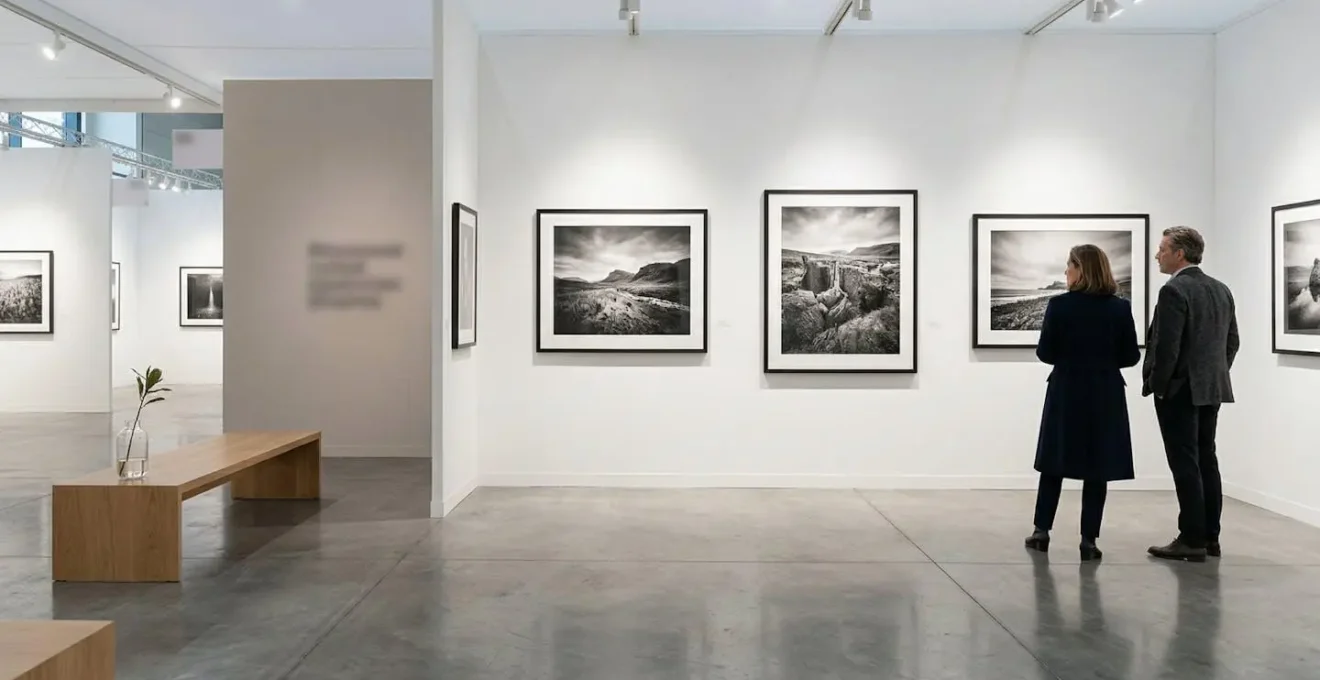
The key to smart acquisition at an art fair isn’t just spotting great art; it’s decoding the market signals the fair itself is sending.
- A gallery’s booth location is a direct indicator of their status and the investment potential of the artists they represent.
- “Fair fatigue” is a real cognitive bias that leads to poor decisions; a structured two-pass strategy is essential to protect your judgment.
- Understanding the edition hierarchy (e.g., Artist’s Proofs vs. numbered prints) is critical for assessing an artwork’s long-term value.
Recommendation: Shift your mindset from a passive viewer to an active strategist. Treat your cognitive energy as a finite resource and use this guide’s framework to focus only on the most promising opportunities.
The sheer scale of an international art fair can feel like a sensory assault. Thousands of artworks, hundreds of booths, and a constant hum of chatter create an environment of overwhelming choice. For the aspiring collector, the pressure to discover the next great artist while navigating this chaos often leads to paralysis or, worse, regrettable impulse buys. The common advice—”buy what you love”—is a fine starting point, but it’s an incomplete strategy for anyone serious about acquiring investment-grade photography. It ignores the subtle, yet powerful, market dynamics at play in the curated chaos of the fair floor.
Most guides focus on researching artists beforehand or setting a budget. While crucial, this preparation only addresses part of the challenge. It doesn’t equip you to read the room, understand the unspoken language of the art market, or protect yourself from the psychological traps inherent to the fair environment. The real advantage lies not in seeing more art, but in seeing it with more clarity. It’s about understanding why a certain gallery is at the front, how to negotiate without offending, and when to walk away to preserve your most valuable asset: your decision-making capacity.
This guide offers a different approach. Instead of a checklist, it provides a strategic framework for decoding the fair. We will move beyond the surface and delve into the structural, psychological, and financial signals that separate savvy collectors from overwhelmed attendees. By treating the fair not as a museum but as a dynamic marketplace, you can transform the experience from an exhausting marathon into a targeted and successful acquisition mission. This is your insider’s map to navigating the noise and identifying true value.
To help you develop this strategic mindset, this article breaks down the essential tactics and insider knowledge needed to conquer the art fair. From interpreting the layout to mastering the art of negotiation, each section provides a focused lens through which to view your next fair visit.
Contents: A Strategic Guide to Art Fair Acquisition
- Why Does a Gallery’s Booth Location Indicate Artist Status?
- How to Ask for a Discount at an Art Fair Without Being Rude?
- Artist Proof or Numbered Edition: Which Should You Buy at the Fair?
- The “Fair Fatigue” Mistake That Leads to Regrettable Purchases
- When to Arrange Your Own Shipping Instead of Using the Fair’s Partner?
- Why Do Viewers Ignore 80% of Images with Cluttered Compositions?
- When to Buy an Emerging Artist’s Work for Maximum ROI?
- What Defines “Contemporary” Photography in the Current Art Market?
Why Does a Gallery’s Booth Location Indicate Artist Status?
In the seemingly democratic maze of an art fair, not all locations are created equal. The fair’s floor plan is a carefully constructed hierarchy, and a gallery’s booth location is one of the most potent, yet overlooked, signals of its standing and, by extension, the status of the artists it represents. Think of it as positional leverage. Prime spots—at the entrance, near VIP lounges, or at the end of major sightlines—are the most expensive and are reserved for established, blue-chip galleries. Fair organizers award these spaces to galleries with a proven track record of sales and critically acclaimed rosters, using them as anchors to draw in major collectors.
When you see a gallery in a prime location, you are seeing a signal of market validation. This gallery has the financial strength to afford the premium rent and the institutional clout to command the best real estate. Consequently, the artists they choose to feature in these booths are typically their most bankable assets. Conversely, galleries in peripheral or less-trafficked areas are often younger, more experimental, or featuring emerging talent. This is where you might find the next rising star, but the investment risk is inherently higher.
An excellent example of this dynamic was seen at the Liste Art Fair. After criticism that its 2024 circular layout hindered foot traffic to certain booths, the fair redesigned its floor plan. The result was a clearer hierarchy where central positions featured established names, while emerging work was concentrated in less central zones. By learning to read the fair’s map, you can quickly assess the relative status of a gallery before even looking at the art on its walls, allowing you to allocate your time and attention more strategically.
Paying attention to this “art fair geography” provides a powerful first filter, helping you quickly distinguish between the established core and the experimental fringe of the market.
How to Ask for a Discount at an Art Fair Without Being Rude?
Negotiating the price of an artwork can feel intimidating, but it’s a standard part of the acquisition process. The key is to approach it not as haggling, but as a respectful conversation about value. The goal is to build a relationship, not just to get a lower price. Before you even mention a discount, demonstrate your genuine interest. Discuss the artist’s work, ask insightful questions, and share your own collecting goals. This establishes you as a serious collector, not a bargain hunter, making the gallery more receptive to negotiation.
When you are ready to discuss price, be prepared. As Washington D.C.-based collector Ramez Qamer advises, “I have to be ready to buy before asking for a discount.” This signals commitment. Instead of asking “Can I get a discount?”, try a softer, more collaborative approach: “Is there any flexibility on the price for a committed collector?” This opens the door for negotiation without being confrontational. It’s also crucial to have realistic expectations. The industry standard discount typically ranges between 5% to 15%, and it’s rarely offered on works by high-demand, sold-out artists or on pieces under $1,000 where margins are slim.
To increase your leverage, consider these strategies:
- Timing is Everything: Approaching a gallery toward the end of the fair can be effective, as they may be motivated to make final sales to avoid return shipping costs.
- Bundle Purchases: Offering to acquire multiple works from the same gallery is a powerful negotiation tool that can often secure a more significant discount.
- Think Beyond Price: If the gallery can’t move on the price, negotiate for ancillary benefits. Ask if they can include framing, cover the shipping costs, or offer a credit toward a future purchase. This is often an easier “win” for both parties.
This approach transforms the negotiation from a zero-sum game into a relationship-building exercise, setting the stage for future acquisitions and a long-term partnership with the gallery.
Ultimately, a successful negotiation leaves both you and the gallerist feeling that a fair and positive transaction has occurred, strengthening your position in the art world.
Artist Proof or Numbered Edition: Which Should You Buy at the Fair?
When considering a photographic print at a fair, you’ll often encounter notations like “21/150” or “AP 2/10.” These aren’t just arbitrary numbers; they represent a strict edition hierarchy that has a direct and significant impact on the artwork’s rarity, desirability, and long-term investment value. A standard numbered edition print (e.g., 21/150) is part of the main, declared run. An Artist’s Proof (AP), however, is part of a smaller, separate edition traditionally reserved for the artist. These proofs are created alongside the main edition and are identical in quality.
From an investment perspective, Artist’s Proofs are almost always the more valuable acquisition. Their scarcity is their key asset. AP editions are typically limited to just 10-15% of the main edition size, making them far rarer. This rarity translates directly into a price premium. In fact, Artist’s Proofs often command 25-50% higher prices than their numbered-edition counterparts from the outset. For a serious collector, acquiring an AP signifies a closer connection to the artist’s process and a more exclusive piece of their market.
To fully understand the landscape, it’s helpful to see where these editions fit within the full hierarchy. The following table breaks down the most common photography edition types by their rarity and relative market value. Note that designations like “HC” (Hors Commerce) or “BAT” (Bon à Tirer) are even rarer and typically not available for public sale, making APs the most valuable edition type a collector can usually acquire at a fair.
| Edition Type | Notation | Rarity | Typical Quantity | Investment Value |
|---|---|---|---|---|
| Hors Commerce (HC) | HC 1/5 | Highest | Extremely limited, artist/gallery only | Most valuable – not available for trade |
| Artist’s Proof (AP) | AP 1/10 or A/P | Very High | 10-15% of edition size | Premium pricing, 20-50% above numbered |
| Printer’s Proof (PP) | PP 1/5 | Very High | Fewer than APs | Slightly more expensive than APs |
| Bon à Tirer (BAT) | BAT | Unique | Only one per edition | Extremely high – final approved proof |
| Numbered Edition | 21/150 | Standard | Full declared edition | Base market price |
While the initial cost will be higher, the long-term appreciation potential and the added prestige of owning a rarer version of the work make the Artist’s Proof the superior choice for the investment-minded collector.
The “Fair Fatigue” Mistake That Leads to Regrettable Purchases
One of the biggest unforced errors a collector can make at an art fair has nothing to do with art and everything to do with biology: decision fatigue. After hours of walking, looking, and analyzing, your brain’s capacity for making rational, high-quality decisions plummets. This mental exhaustion, or “fair fatigue,” is when you are most vulnerable to making an impulsive purchase you later regret—or, conversely, walking away from a great opportunity because you lack the mental energy to commit. This isn’t just a feeling; it’s a documented psychological phenomenon. A landmark study on parole board judges showed that favorable rulings dropped from 65% to nearly 0% as they made more decisions throughout the day, with their judgment only resetting after a break.
Your mind is no different. Every choice you make at a fair—which booth to enter, which work to look at, which price list to request—depletes your finite reserve of cognitive capital. When that capital is low, you become more likely to rely on shortcuts: buying something because it’s flashy, because the gallerist is persuasive, or simply to feel a sense of accomplishment. To protect your investment strategy, you must protect your mind.
As the image above suggests, the sheer volume of information can be mentally taxing. The most effective way to combat fair fatigue is to adopt a structured approach that separates the process of discovery from the act of decision-making. Don’t try to do both at the same time. The following checklist outlines a “Two-Pass Strategy” designed to preserve your cognitive energy and ensure every acquisition is a deliberate, well-reasoned choice.
Your Action Plan: The Two-Pass Strategy to Beat Fair Fatigue
- First Pass – Discovery Mode: Arrive early when your energy is highest. Walk the entire fair with the sole purpose of looking. Take quick photos (with permission) and collect cards for works that resonate, but make no purchase decisions.
- Document and Exit: After the first pass, create a shortlist of 3-5 works that genuinely stand out. Note the booth number, artist, edition details, and price. Then, physically leave the fair to reset your mind.
- Research Break: Away from the stimulating fair environment, use your shortlist to conduct objective research. Use platforms like Artnet or Artsy to review the artists’ price history, auction results, and overall market trajectory.
- Second Pass – Decision Mode: Return to the fair—either hours later or the next day—with your cognitive energy refreshed. Go directly to the booths on your shortlist to view the works again and make an informed, confident purchasing decision.
- Set a Decision Limit: Commit to making major purchase decisions only in the morning or immediately after a meal, when your decision-making capacity is at its peak. Avoid committing to expensive works late in the afternoon.
This disciplined strategy transforms the fair from an exhausting ordeal into a targeted, efficient, and ultimately more successful endeavor, ensuring your collection is built on conviction, not fatigue.
When to Arrange Your Own Shipping Instead of Using the Fair’s Partner?
After the thrill of an acquisition, the logistics of getting the artwork home can feel like an afterthought. Most galleries and fairs offer a convenient, one-stop shipping solution through an official partner. For smaller works or lower-value purchases, this is often a perfectly adequate option. However, for investment-grade photography, blindly accepting the default shipper can be a costly mistake in terms of both price and protection. The convenience of the fair’s partner comes at a premium, and their insurance coverage may be insufficient for high-value pieces.
The critical question is one of value. As a general rule, you should start exploring independent shipping options for artworks valued over approximately $25,000. Above this threshold, the potential savings from competitive quotes and the need for specialized handling and insurance become significant. Specialized fine art logistics companies offer a level of service and security that general carriers cannot match. They understand the specific requirements for crating, climate control, and handling fragile, high-value art.
Arranging your own shipping becomes particularly strategic when you acquire multiple works from different galleries at the same fair. Instead of paying separate shipping and handling fees to each gallery, you can hire a single fine art shipper to consolidate all your purchases. They will collect the pieces from each booth and create one consolidated, fully insured shipment, drastically reducing your overall costs and logistical headaches. When making this decision, consider the following points:
- Request Competitive Quotes: Always get quotes from at least two specialized fine art shippers to compare against the fair’s partner.
- Verify “Nail-to-Nail” Insurance: Ensure the insurance policy covers the artwork’s full replacement value from the moment it leaves the gallery wall to the moment it’s on yours. Default fair insurance often has low coverage limits.
- Check Liability Terms: Understand who is responsible if damage occurs. A dedicated art shipper typically offers more comprehensive liability protection.
- Factor in International Costs: For international fairs, a specialized shipper can help you navigate import taxes, customs clearance, and duties, which can significantly impact your total cost.
While it requires a bit more coordination, arranging your own shipping for significant acquisitions provides peace of mind and financial benefits that far outweigh the initial convenience of the default option.
Why Do Viewers Ignore 80% of Images with Cluttered Compositions?
In the visually saturated environment of an art fair, an artwork has only a few seconds to capture a viewer’s attention. Photographs with cluttered, complex compositions are at a significant disadvantage. The human brain is wired to seek clarity and order; when confronted with visual chaos, it tends to disengage. This is why a photograph with a strong, clear, and simple composition—often utilizing negative space—has far greater “wall power.” It is not just aesthetically pleasing; it is neurologically effective. It provides a point of entry for the eye and mind, inviting longer contemplation.
From an investment standpoint, this concept of market legibility is paramount. A photograph that is easy to “read” and understand visually is also easier to remember, discuss, and, ultimately, resell. It becomes iconic. As one market analysis notes, “Graphically simple, iconic photographs have greater market recognition and are easier to resell than visually complex ones.” Think of the most famous photographs in history; they almost all share a foundation of powerful, uncluttered composition. This graphic simplicity doesn’t mean the work is simplistic. On the contrary, the best minimalist compositions are rich with detail and conceptual depth that reward sustained viewing.
The artwork above exemplifies this principle. The strong composition and generous use of negative space command attention and create a sense of calm and focus, making it stand out in a crowded room. When assessing a photograph for its investment potential, ask yourself: Is the primary subject immediately clear? Does the composition guide my eye, or does it leave it wandering aimlessly? Is the image memorable? A work that is visually confusing or requires a lengthy explanation to appreciate is a much riskier long-term investment.
Prioritizing works with strong market legibility is a disciplined strategy that increases the likelihood of both personal enjoyment and future financial appreciation.
When to Buy an Emerging Artist’s Work for Maximum ROI?
Acquiring work from an emerging artist offers the highest potential for return on investment, but it also carries the greatest risk. The challenge is to identify talent on an upward trajectory before their market prices fully mature. With the global fine art photography market projected to reach $12 billion by 2027, driven by strong annual appreciation, spotting the right emerging artist can be incredibly lucrative. The key is to look for a specific confluence of signals that indicate an artist is moving from the “emerging” to the “established” category.
The single most important signal is prestigious gallery representation. When a respected gallery with a strong program and a history of building artists’ careers signs an emerging photographer, it’s a massive vote of confidence. This gallery is investing its own capital and reputation in the artist’s future. The next signal is institutional validation. Has the artist recently graduated from a top-tier MFA program (like Yale, RISD, or UCLA)? Have they been included in group shows at respected museums or non-profit art spaces? Have they received any notable grants or awards? Each “yes” is a building block of critical consensus.
Early press and critical writing are also crucial indicators. A thoughtful review in a major art publication like Artforum, Frieze, or even a well-regarded online journal can significantly boost an artist’s profile. Finally, look at the work itself. Is the artist developing a coherent and recognizable visual language? An artist who is producing a consistent, focused body of work is more likely to build a lasting career than one who is stylistically scattered. The ideal moment to buy is when you see these signals beginning to align: the artist has secured representation from a strong gallery, is starting to appear in curated group shows, but has not yet had a major solo museum exhibition or a significant auction record. This is the sweet spot where the risk is mitigated, but the price point has not yet skyrocketed.
By learning to recognize this pattern of validation, you can make a calculated bet on an emerging artist with a much higher probability of success.
Key Takeaways
- Read the Signals: Success at an art fair depends less on seeing everything and more on reading the hidden market signals of booth location, edition types, and artist validation.
- Protect Your Cognitive Capital: Decision fatigue is your biggest enemy. Implement a “two-pass” strategy to separate discovery from decision-making, ensuring every purchase is deliberate and well-reasoned.
- Negotiate Value, Not Just Price: Approach negotiation as a relationship-building opportunity. If the price won’t move, seek ancillary benefits like framing or shipping to increase the overall value of your acquisition.
What Defines “Contemporary” Photography in the Current Art Market?
For a collector, understanding what makes a photograph “contemporary” is about more than just a date. It’s about recognizing the conceptual and market forces that elevated photography from a documentary medium to a collectible fine art form on par with painting and sculpture. While the term broadly refers to art of the present moment, in the photography market, it signifies a specific legacy of critical and institutional acceptance that began in the mid-20th century and solidified its investment potential.
The turning point for photography as a fine art can be traced back to a crucial period of institutional validation. As art market historical analysis shows, photography departments established at major museums like the Museum of Modern Art (MoMA) during the 1960s and 1970s were instrumental. This act of curating, exhibiting, and acquiring photographs within the world’s most important art institutions provided the critical stamp of approval the medium needed. It signaled to collectors that photography was not just a craft, but an art form with a history, a critical discourse, and a future worthy of investment.
This institutional embrace is what separates contemporary photography from its historical predecessors. A contemporary photograph is not just a picture; it is an object that exists within this ecosystem of galleries, museums, critics, and auction houses. As one market guide states:
Photography has become a collectible fine art equal to the more traditional arts, such as painting, sculpture and printmaking.
– Photography collecting market analysis, Contemporary art investment guide
Therefore, when you acquire a contemporary photograph at a fair, you are buying into this legacy. The work’s value is defined by the artist’s engagement with contemporary ideas, their place within this established market system, and the work’s physical properties as a limited-edition object. This understanding is the foundation of a sophisticated collection.
By recognizing these defining characteristics, you move beyond simply liking an image and begin to assess its cultural and financial significance as a contemporary artwork, making you a more discerning and successful collector.