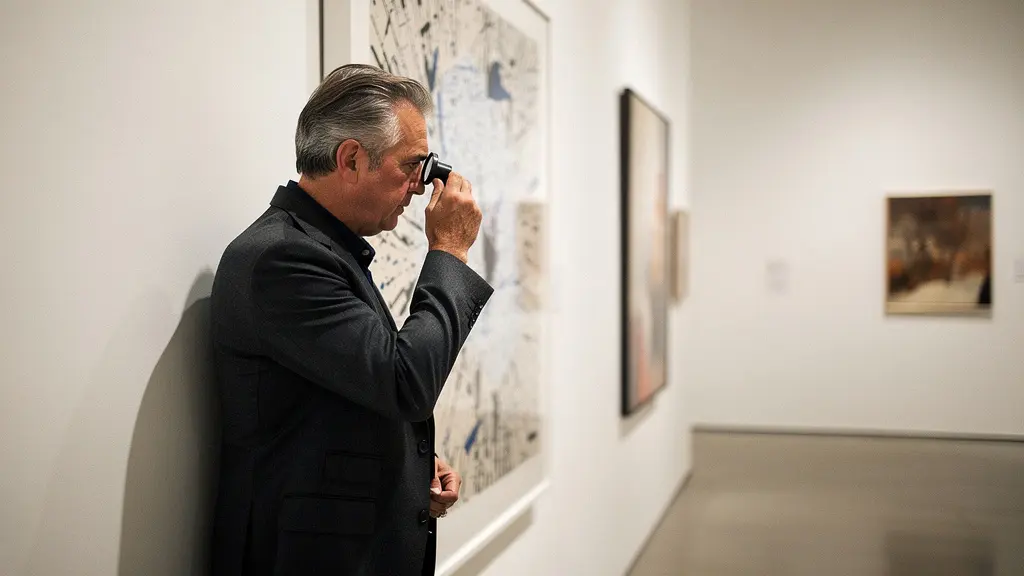
Determining the fair market value of a fine art print is not guesswork; it is a methodical assessment of specific, quantifiable market signals.
- The value of a print is dictated by a matrix of factors, including its scarcity (edition size), the artist’s institutional standing, and verifiable auction history.
- Authenticity and condition are non-negotiable prerequisites; a compromised print, regardless of its rarity, loses significant value.
Recommendation: Begin any valuation by researching comparable sales (“comps”) in reputable auction databases before analyzing the specific attributes of the print itself.
For collectors and artists alike, the moment of pricing a fine art photograph can be paralyzing. You stand before a piece you admire, but the number on the tag feels arbitrary. Is it a fair price? A wise investment? Or simply an inflated figure? The common advice—to check the artist’s reputation or look for a signature—scratches the surface but offers little real clarity. This approach leaves you vulnerable to overpaying or, for artists, undervaluing your own work.
The truth is that the art market, while seemingly opaque, operates on a set of logical principles. Professional appraisers don’t rely on intuition; they employ a systematic framework to decode an artwork’s value. The key is not to simply acknowledge that factors like condition or edition size matter, but to understand precisely how they influence the final price. It requires moving beyond surface-level checks and learning to read the distinct market signals that point toward a print’s true fair market value.
This guide demystifies that process. We will deconstruct the valuation matrix used by experts, transforming you from a passive admirer into a confident assessor. We will not offer a simple calculator but a durable methodology, equipping you with the critical thinking to analyze a print’s scarcity, provenance, and market history to arrive at an informed price estimate, all without needing to hire an appraiser for your initial assessment.
This article provides a structured framework for understanding the core drivers of value in the fine art photography market. Below, the summary outlines the key areas we will dissect, from the mathematics of edition sizes to the nuances of negotiation.
Summary: A Framework for Valuing Fine Art Photography
- Why Does an Edition of 5 Cost 10x More Than an Edition of 50?
- How to Use Auction Records to Determine Fair Market Price?
- Exhibition History vs. Social Media Fame: Which Drives Real Value?
- The Pricing Trap That Suggests a Print Is Fake or Unauthorized
- When to Buy an Emerging Artist’s Work for Maximum ROI?
- Why Do Certain Prints Appreciate by 200% While Others Stagnate?
- How to Ask for a Discount at an Art Fair Without Being Rude?
- What Defines an Investment-Grade Creation in the Current Art Market?
Why Does an Edition of 5 Cost 10x More Than an Edition of 50?
The single most significant factor in a print’s base value is its scarcity, dictated by the edition size. However, the relationship between scarcity and price is not linear. The market does not dictate that a print from an edition of 10 is simply worth five times more than one from an edition of 50. Instead, value increases exponentially as the edition size shrinks. This is because smaller editions cater to a more exclusive tier of collectors who prioritize rarity above all else. A print from an edition of five or ten enters a different class of asset, competing with unique works like paintings or drawings.
The total number of impressions is also more complex than the number written on the print. A full edition includes various proofs created alongside the main run. These proofs, while not part of the numbered edition, are authentic works that can and do enter the market. Understanding this “full picture” is critical for an accurate assessment. The key categories include:
- Artist’s Proofs (AP): Typically 10% of the edition size, these were traditionally for the artist’s personal use and often command a slight premium.
- Printer’s Proofs (PP): Given to the master printer, these are rare to find on the market.
- Bon à Tirer (BAT): The single “good to pull” print that sets the standard for the edition. It is often the most valuable impression of all.
- Hors Commerce (HC): Prints marked “not for sale,” often used for promotional purposes, which frequently find their way to the market later.
Therefore, an edition marked “50” might actually comprise 60 or more total prints. The dramatic impact of a small edition size on long-term value is well-documented. For instance, a Robert Longo ‘Eric’ lithograph from 1984, numbered out of a small edition of 38, sold at Sotheby’s in 2022 for over $56,000. In the 1980s and 90s, it originally sold for only a few thousand dollars, demonstrating how exclusivity is a powerful engine for appreciation.
How to Use Auction Records to Determine Fair Market Price?
Once you understand a print’s intrinsic rarity, the next step is to find its “fair market value” through comparable sales, or “comps.” This is the cornerstone of any professional appraisal. The most reliable source for this data is auction records, which provide transparent, publicly available prices for identical or similar works. Accessing this information has become significantly easier with several online databases that aggregate sales from thousands of auction houses worldwide.
Your goal is to find records for the exact same print (same artist, title, and edition). If that’s not possible, you look for prints by the same artist from a similar period, of a similar size, and with a similar edition number. This triangulation of data points helps build a strong case for a specific price range. While some of these databases require a subscription, many offer day passes or limited free searches, which are often sufficient for a targeted assessment.
These databases are indispensable tools. For example, Artprice alone tracks data from over 802,300 artists and 15,579,900 auction prices from 6,500 auction houses, providing a vast pool of data. Choosing the right database depends on your specific needs, as each has its strengths.
| Database | Coverage | Day Pass Price | Special Features |
|---|---|---|---|
| Askart | 979+ auction houses | $19.95 | Artist signatures, sales charts |
| Artprice | 6,500 auction houses | Varies | 15.5M auction prices |
| Invaluable | 15+ years data | Free browsing | Live bidding platform |
| Artnet | Fine prints included | $32.50 (5 searches) | Paintings & multiples |
Exhibition History vs. Social Media Fame: Which Drives Real Value?
An artist’s reputation is a major value driver, but in the digital age, it’s crucial to distinguish between two different kinds of fame: institutional validation and social media popularity. While a large Instagram following can generate initial sales, it is the artist’s exhibition history with reputable galleries, museums, and biennials that builds durable, long-term market value. An appraiser places significant weight on an artist’s curriculum vitae (CV), looking for markers of critical, not just commercial, success.
Institutional validation acts as a third-party endorsement. When a museum acquires an artist’s work for its permanent collection or a respected gallery represents them, it signals to the market that experts have vetted the work’s quality and historical importance. This creates a foundation of trust that fleeting online trends cannot replicate. As noted by experts in the field, current exhibitions and historical anniversaries directly increase interest, demand, and ultimately, prices for an artist’s work.
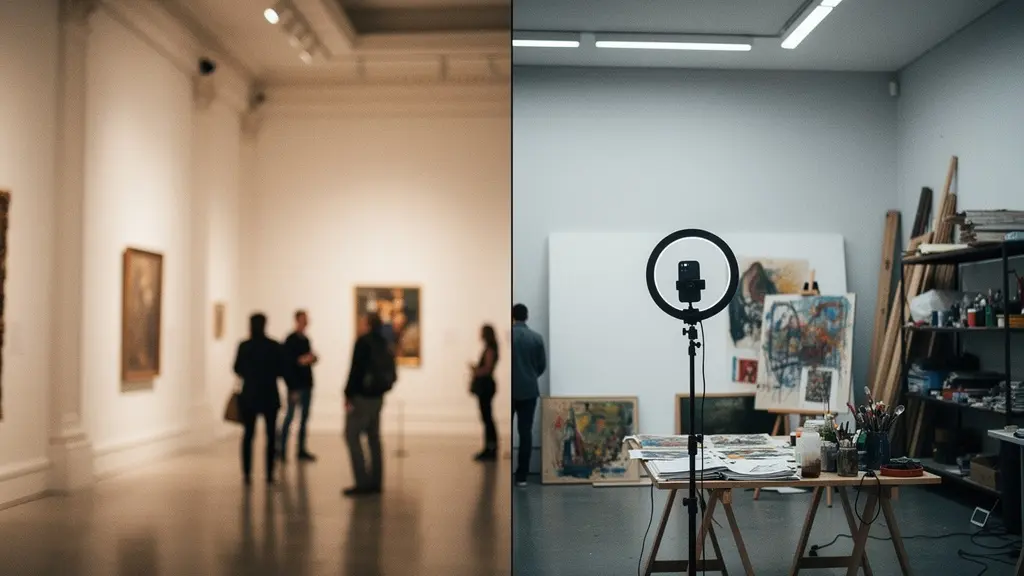
This is not to say social media is irrelevant. It can be a powerful tool for discovery, especially for emerging artists. However, for valuation purposes, you must look for evidence that this online fame is translating into offline, institutional recognition. Is the artist being picked up by established galleries? Are they being included in curated group shows? These are the signals that indicate an artist is building a lasting career, which is the bedrock of investment-grade value.
The Pricing Trap That Suggests a Print Is Fake or Unauthorized
A price that seems “too good to be true” is the single biggest red flag in the art market. If a print is offered for a fraction of its established auction records, you must immediately shift your mindset from valuation to authentication. Discrepancies in price often point to serious issues with the work’s legitimacy, such as it being a fake, an unauthorized reproduction, or a posthumous print being misrepresented as a lifetime edition.
For example, authentic prints by Marc Chagall can have a massive price variance. While large-edition reprints may sell for a few hundred dollars, small, signed editions from his lifetime can command over $20,000. A seller offering a “signed Chagall” for $500 should be met with extreme skepticism. The price itself becomes the primary clue that something is amiss. An informed collector uses this signal to begin a forensic investigation into the print’s authenticity and provenance before even considering its condition or aesthetic merits.
This requires a systematic check for authenticity markers. The ultimate proof is inclusion in the artist’s catalogue raisonné—the definitive, scholarly compendium of all their known works. If a print is not in the catalogue, it is almost certainly not authentic. Short of that, the Certificate of Authenticity (COA) must be scrutinized, as its value depends entirely on its source.
Your Audit Checklist: Spotting Red Flags in a Print
- Price Check: Is the asking price dramatically below established auction records for comparable works by the artist?
- COA Verification: Scrutinize the Certificate of Authenticity. An artist’s studio or estate COA is the gold standard; a gallery COA is good; a generic seller’s COA is a major red flag.
- Edition Type: Distinguish between a “lifetime” print (made and signed by the artist) and a “posthumous” or “estate-stamped” print, which are far less valuable.
- Condition Anomaly: Be wary of an “old” print that is in flawless, perfect condition. It could be a modern reproduction.
- Catalogue Raisonné: Research if the work is listed in the artist’s official catalogue raisonné. This is the ultimate form of authentication.
When to Buy an Emerging Artist’s Work for Maximum ROI?
Assessing the work of an emerging artist—one without a long auction history or museum presence—is inherently more speculative, but it also offers the greatest potential for a high return on investment (ROI). Here, your assessment shifts from analyzing past performance to identifying future potential. The key is to apply the same principles of scarcity and institutional validation, but on a smaller, more forward-looking scale.
First, look closely at the edition sizes. Astute emerging artists and their publishers understand that smaller editions serve the collector market better. A recent trend has seen typical edition sizes decrease from 200-300 prints to more collector-friendly editions of 25-100. An artist who is already producing small, tightly controlled editions is demonstrating an understanding of the primary market mechanics that create long-term value. This is a strong positive signal.
Second, investigate their early career trajectory. Even without a solo museum show, are they showing signs of institutional interest? Look for these markers:
- Inclusion in a respected graduate show (e.g., from Yale, RISD, or Goldsmiths).
- Representation by a reputable gallery known for launching new talent.
- Winning a prestigious art prize or grant.
- Positive reviews in respected art publications, not just social media mentions.
Buying work from an artist who is just beginning to accumulate these accolades is the sweet spot for potential ROI. You are getting in before their market is fully established and prices have climbed. It is a higher-risk, higher-reward scenario that requires diligent research into the artist’s professional practice and early indicators of critical success.
Why Do Certain Prints Appreciate by 200% While Others Stagnate?
Beyond the primary factors of artist reputation and edition size, two critical elements separate prints that appreciate significantly from those that stagnate: condition and significance. While a limited edition from a famous artist might seem like a guaranteed investment, its value can be severely compromised if these two aspects are not in place. According to broad market analysis, limited edition prints from well-known artists can increase in value, while open editions or those in poor condition rarely do.
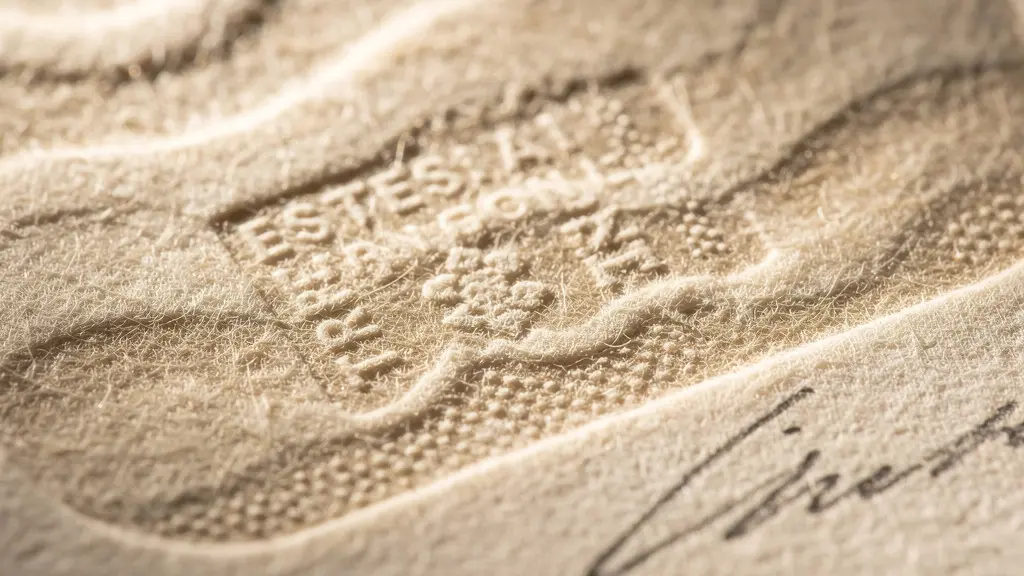
Condition is paramount. For a print to hold or increase its value, it must be in excellent, archival condition. Any damage, such as tears, stains, foxing (brown spots), or fading due to light exposure, can dramatically reduce its price. A professional condition report will use specific terminology, but you can perform a basic assessment by looking for discoloration (especially around the edges), brittleness of the paper, and the vibrancy of the ink. The back of the print (the verso) is just as important as the front.
Significance refers to the importance of the specific image within the artist’s overall body of work (their oeuvre). Is this print an example of their most celebrated subject matter or style? Was it created during a pivotal period in their career? A print that is considered a “signature piece”—one that is frequently published in books and included in major retrospectives—will always be more sought-after and appreciate more rapidly than a minor or atypical work from the same artist. The combination of pristine condition and historical significance is the formula for maximum value appreciation.
How to Ask for a Discount at an Art Fair Without Being Rude?
Negotiation is an accepted and expected part of the art market, especially at art fairs. However, there is a professional etiquette to follow. Approaching it correctly can not only save you money but also help build a positive relationship with the gallery. The key is to frame your inquiry not as a demand, but as a genuine expression of serious interest. Gallerists are more willing to be flexible with a knowledgeable collector they believe might become a repeat client.
Timing and language are everything. The last day of the fair is often the best time to negotiate, as galleries are motivated to sell remaining works to avoid the cost and hassle of shipping them back. When you approach the gallerist, express your admiration for the piece and the artist first. From there, you can tactfully open the door to a discussion about price. Many galleries offer a standard 10% “professional courtesy” discount to other art world professionals, and it’s not unreasonable for a serious collector to inquire about a similar level of flexibility.
To navigate this conversation professionally, consider these proven strategies:
- Time your approach: Engage with the gallery on the last day of the fair.
- Build rapport: Frame your interest as a desire to build a collection, e.g., “I’m very serious about this piece and would love to add it to my collection.”
- Reference the standard: Tactfully mention the common 10% courtesy discount.
- Emphasize local ties: If you are a local collector, mention it. This implies the potential for future business and a long-term relationship.
- Consider bundling: Expressing interest in multiple pieces from the same gallery gives you significantly more leverage for a discount.
As one pricing guide for professionals notes, haggling isn’t necessarily a negative. For galleries, it confirms the client’s serious intent, and for collectors, it helps them feel they secured a good deal, fostering a positive transaction for both parties.
Key Takeaways
- Scarcity is Paramount: Value is driven by edition size, with smaller, tightly controlled editions commanding exponential price premiums.
- Data Over Intuition: Use auction databases (like Artnet, Artprice) to find “comparable sales” and establish a fact-based fair market value.
- Validation Hierarchy: Institutional validation (museum shows, gallery representation) is a far more reliable indicator of long-term value than social media fame.
What Defines an Investment-Grade Creation in the Current Art Market?
Ultimately, an “investment-grade” print is one that successfully combines all the factors we’ve discussed into a single, cohesive package. It is a work that is not only aesthetically compelling but also has a clear and positive answer to every question in a valuation matrix: it is authentic, in pristine condition, from a small edition, by an artist with strong institutional validation, and possesses a documented history of comparable sales that indicates stable or rising demand.
Case Study: The Three Pillars of Investment-Grade Print Valuation
The methodology used by specialist brokers like MyArtBroker provides a clear framework for defining an investment-grade work. Their valuation process rests on three essential factors: 1) A thorough condition assessment examining any physical imperfections, 2) A review of the sales and acquisition history to track provenance and market performance, and 3) An analysis of current market data, incorporating both public auction results and private sale data. This 360-degree view is what separates a decorative print from a true asset.
One final, critical factor to consider is the gallery’s commission structure. When a primary market gallery sells a work, a 50% commission is a standard industry practice. This means that for a print to simply retain its initial value on the secondary (resale) market, it must sell for double what the artist received. For it to be a profitable investment, it must sell for even more. This is why prints from artists with strong and rising auction records are considered safer investments; there is a proven market willing to pay prices that absorb these built-in costs.
An investment-grade print, therefore, is one with enough positive market signals—rarity, significance, and demand—to overcome this financial hurdle and demonstrate a clear path to appreciation. It is a work that has been vetted, authenticated, and validated by the market ecosystem itself.
By applying this methodical framework, you can begin to assess fine art prints with the same critical eye as a professional, empowering you to build a collection with confidence and financial intelligence.