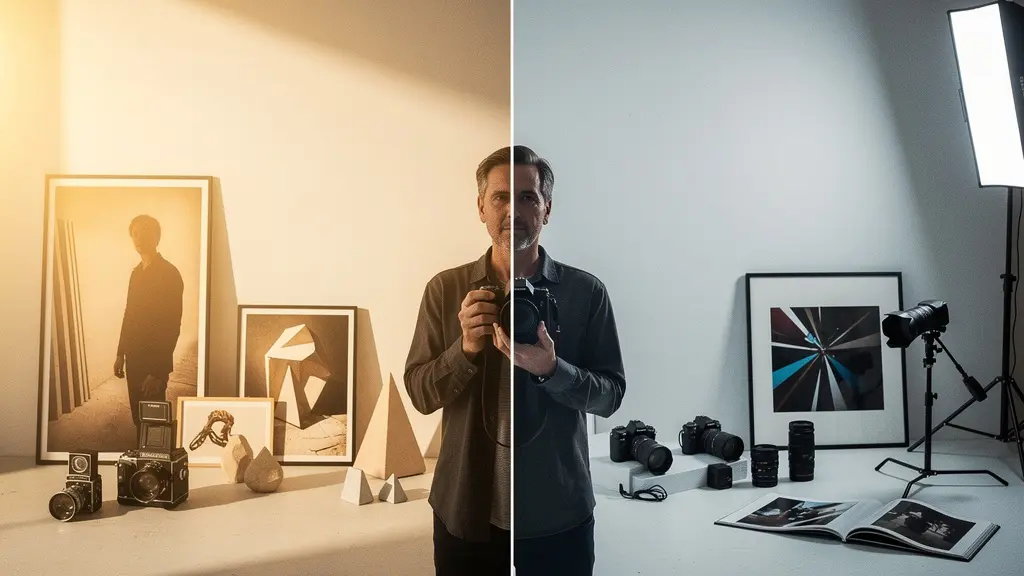
The distinction between a commercial photo and a fine art piece has little to do with subject matter or technical quality; it is forged in conceptual discipline and strategic market positioning.
- Fine art succeeds not by being beautiful, but by communicating a complex idea or emotion that “pierces” the viewer—a quality that cannot be manufactured on demand.
- Long-term value is built through strategic scarcity, such as limited editions, which transforms a photograph from a reproducible image into a collectible cultural artifact.
Recommendation: Stop chasing technical perfection and instead focus on developing a singular artistic question that can sustain an entire body of work, making your vision, not your skill, the commodity.
For many aspiring photographers, the path forward seems to split into two irreconcilable directions: the client-driven, financially stable world of commercial photography and the elusive, creatively pure realm of fine art. This perceived dichotomy often creates a paralysis, a fear that choosing one means sacrificing the other. The common advice—that the difference is merely “intent”—is true, but it is a woefully incomplete map for a journey that requires not just creative passion but strategic navigation. You are told to “be an artist,” but rarely are you shown how to construct a career that is both creatively fulfilling and commercially viable in the fine art space.
The confusion is understandable. We see images of stunning technical quality in advertisements and images of startling simplicity in galleries, and the lines blur. The truth, however, is that the gulf between a snapshot and a piece of fine art is not measured in megapixels or lens quality. It is measured in intellectual depth and narrative control. It is the difference between documenting the world as it is and building a new world within the frame. This distinction is not a matter of taste, but a discipline—a set of principles that can be learned and honed.
This guide moves beyond the platitudes. It is designed to provide you, the discerning photographer, with the curatorial framework needed to understand this critical distinction. We will deconstruct the very essence of what transforms an image into a valuable work of art, exploring the balance between financial reality and creative ambition, the mechanics of market value, and the signs that your artistic voice is ready to stand on its own. The goal is not to choose a path, but to build a bridge between them, allowing you to cultivate a sustainable and meaningful career defined by your unique vision.
This article will delve into the core principles that distinguish transient images from lasting artistic statements. By understanding these pillars, you can begin to chart a more deliberate and powerful course for your photographic career.
Summary: Fine Art vs. Commercial: A Curator’s Guide to Building Your Photographic Legacy
- Why Does a Snapshot Fail to Become Fine Art in 99% of Cases?
- How to Transition from Commercial Shoots to Fine Art Projects Without Losing Income?
- Limited Edition vs. Open Edition: Which Strategy Builds Higher Long-Term Value?
- The Amateur Mistake of Confusing High Resolution with High Art
- When to Launch Your First Solo Project: 3 Signs You Are Ready
- Why Does Mimicking Popular Trends Destroy Your Long-Term Career?
- Why Did This Project Launch Their Career Into the Blue Chip Market?
- How to Develop an Artistic Vision That Stands Out in a Saturated Market?
Why Does a Snapshot Fail to Become Fine Art in 99% of Cases?
The simple act of taking a photograph is now universal. Billions of images are captured daily, yet vanishingly few ever transcend the status of a mere snapshot to become fine art. The reason for this is not a lack of beauty or technical skill, but a failure to possess what the theorist Roland Barthes called the punctum. He distinguished between two core experiences of viewing a photograph. The first is the studium, which refers to the general, culturally understood content of an image—a landscape, a portrait, a historical event. It is what we recognize and can easily name. Most snapshots exist entirely within the realm of the studium; they are pleasant, informative, and universally legible.
Fine art, however, must possess a punctum. This is the unexpected detail, the accidental gesture, the “prick, a little hole, a little spot” that pierces the viewer’s consciousness and elevates the image from a general document to a personal, unforgettable experience. According to Barthes’ seminal analysis in Camera Lucida, the studium is always coded while the punctum is not. This quality is not something that can be intentionally “added” through better lighting or a sharper lens. It arises from the photographer’s deep engagement with their subject, allowing for a moment of unplanned truth to emerge. A snapshot documents; a work of art reveals.
This is why a fine artist’s work is considered, not snapped at random. The artist is not just looking for a beautiful scene but is hunting for the punctum, the detail that will resonate with a deeper, often inarticulable human truth. A snapshot shows you what the photographer saw. A fine art photograph makes you feel what the photographer felt, or more profoundly, makes you feel something uniquely your own. It is this ability to provoke a personal, resonant experience that begins the journey from a disposable image to a lasting cultural artifact.
How to Transition from Commercial Shoots to Fine Art Projects Without Losing Income?
The “starving artist” trope is one of the most damaging myths in the creative world. It presents a false choice: financial stability or artistic integrity. For a photographer, the reality is that commercial work can and should be the engine that fuels your fine art practice. The transition is not about abandoning one for the other, but about building a strategic and sustainable bridge between them. The key is to see your commercial assignments not as a creative compromise, but as a paid research and development lab.
A practical approach is the 80/20 financial firewall strategy. This involves dedicating 80% of your working time to efficient, high-paying commercial gigs that cover your financial needs and fund your artistic endeavors. The remaining 20% is then protected, sacred time for “deep work” on your personal fine art projects, free from the pressure of monetization. Within this framework, your commercial shoots become an invaluable resource. Use them to test new lighting techniques, experiment with conceptual approaches, and refine your technical skills on a client’s budget. The outtakes and unused shots from a commercial project, once legally cleared, can even be re-edited and re-contextualized to become part of your fine art portfolio, shifting their narrative from product to personal expression.
This dual approach provides both the financial runway and the creative space necessary for a fine art career to gestate. As photographer Brooke Shaden shared, this strategy was pivotal in her own journey:
I started creating self-portraits that were just as satisfying as the films I was making, but allowed for a more flexible creative process. After a few months of creating images, I never looked back and began pursuing my fine art photography career while maintaining commercial income.
– Brooke Shaden
By building a portfolio that showcases both your technical prowess (commercial) and your unique vision (fine art), you attract a more diverse range of opportunities. You are no longer just a photographer for hire; you are an artist with a vision, and that is a far more valuable proposition.
Limited Edition vs. Open Edition: Which Strategy Builds Higher Long-Term Value?
Once you have a body of work, the question of how to present and sell it becomes paramount. This is not a mere sales decision; it is a fundamental part of your artistic statement. The choice between offering your prints as a limited edition or an open edition sends a powerful signal to the market about the nature and perceived value of your art. An open edition, where prints can be produced indefinitely, prioritizes accessibility. It allows more people to own your work at a lower price point, but it inherently caps the print’s potential for appreciation. It functions more like a poster or a product.
A limited edition, by contrast, introduces the crucial element of strategic scarcity. By declaring that only a finite number of prints will ever be made (e.g., an edition of 10, 25, or 100), you transform the photograph from a reproducible image into a collectible object. This act imbues the work with provenance and finality. For collectors, the edition number is a guarantee of rarity, which is the primary driver of value in the secondary market. Indeed, prints initially sold for $2,000 can often resell for $4,000-$5,000 once the edition has sold out, demonstrating a strong potential for appreciation.
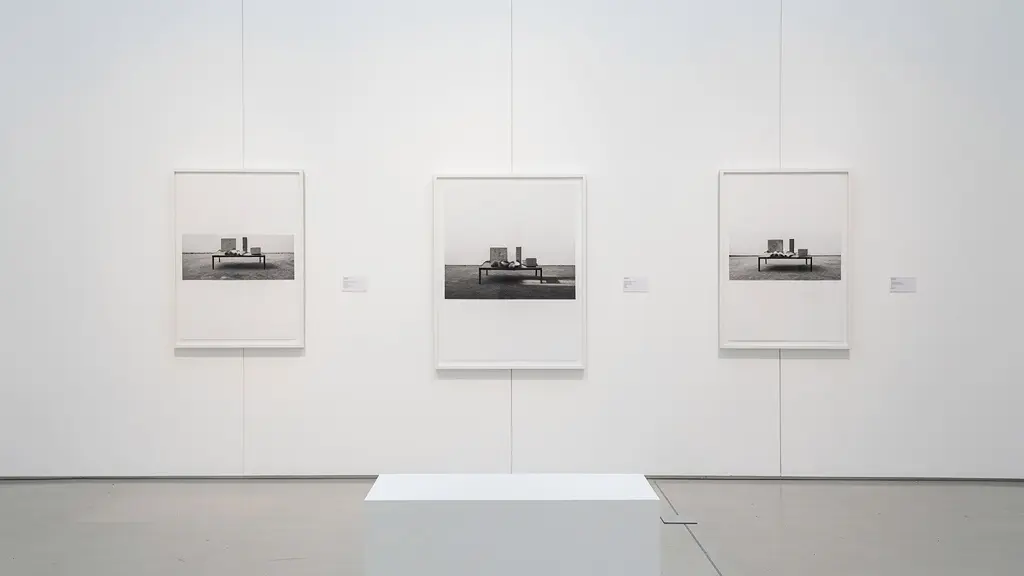
This decision directly impacts the long-term trajectory of your career. While open editions provide immediate cash flow, limited editions build a collector base and establish your work as a serious investment. The art world operates on these signals of intent and integrity. A smaller, more exclusive edition, often accompanied by a small number of “Artist Proofs” (APs), signals a high level of confidence in the work’s artistic merit.
The following table, based on a comparative analysis of print market strategies, clarifies these critical distinctions:
| Edition Type | Typical Size | Initial Price | Resale Potential | Artist Intent Signal |
|---|---|---|---|---|
| Limited Edition | 2-100 prints | Higher ($2,000+) | Strong appreciation | Artwork finality & integrity |
| Open Edition | Unlimited | Lower ($200-800) | Limited appreciation | Broad accessibility |
| Artist Proof | 10% of edition | 20-50% premium | Highest value | Special collector status |
The Amateur Mistake of Confusing High Resolution with High Art
In an age of ever-advancing camera technology, a pervasive myth has taken hold: that technical perfection is synonymous with artistic quality. Aspiring photographers often obsess over achieving the highest resolution, the most flawless clarity, and the most pristine image possible. This is a fundamental misunderstanding of what constitutes art. Technical skill is merely a tool, and as any seasoned curator will tell you, it is often the least interesting tool in an artist’s arsenal. An image that is technically perfect but conceptually empty is just a high-resolution document.
True fine art often derives its power from its supposed “flaws.” The grain in a Daido Moriyama photograph is not a mistake; it is the visual language of urban grit and alienation. The blur in a Francesca Woodman self-portrait is not a focus error; it is the very expression of a fleeting, ghostly presence. In these cases, the technical “imperfection” is not a barrier to the message; it *is* the message. The texture, the grain, and the aberrations are what create the emotional depth and the all-important punctum that a clinically sterile image can never achieve.
As one art theory expert compellingly argues, it is crucial to deconstruct this obsession with perfection:
Deconstruct ‘Technical Perfection’ as just one artistic tool, and often the least interesting one. The conceptual power of a blurry, low-fi, or technically ‘flawed’ image from artists like Daido Moriyama or Francesca Woodman shows the ‘flaw’ is the message.
– Photography Art Theory Expert, Understanding Fine Art vs Technical Photography
The focus should not be on creating a perfect representation of reality, but on using the photographic medium to convey a specific idea or emotion. Your camera’s settings are less important than your conceptual settings. A powerful artistic statement can be made with a pinhole camera or a disposable one, while a 100-megapixel beast can produce nothing but soulless, empty files. The real work happens in your mind, not in your camera’s sensor.
When to Launch Your First Solo Project: 3 Signs You Are Ready
Moving from creating individual “good photos” to developing a cohesive fine art project is the single most important leap in an artist’s career. A solo project, or a body of work, is what galleries look for, what collectors invest in, and what ultimately defines your artistic legacy. But how do you know when you are ready to make that leap? It is not about having a certain number of images, but about achieving a certain level of conceptual and narrative maturity. There are three critical signs that indicate you have moved from simply taking pictures to building a project.
The first sign is having a clear Conceptual Thesis. You can articulate the central question or idea of your project in a single, compelling sentence. You are no longer just “shooting portraits”; you are “exploring the fragility of masculine identity in post-industrial cities.” This thesis becomes your guiding star, ensuring that every image you create serves a larger purpose. The second sign is Narrative Cohesion. Your images work together as a sequence. They converse with one another, building a cumulative meaning that is far greater than the sum of its parts. If you can remove one image from the series and the entire statement feels weaker, you have achieved cohesion. Your project has become a visual sentence, not just a collection of beautiful words.

The final, and most crucial, sign is a shift from Interpretation Over Documentation. Your subjects are no longer just what they are; they have become vehicles for universal themes. A photograph of a dying flower is no longer about that specific flower; it is a meditation on mortality, beauty, and decay. Your “why” has become more important than your “what.” When you reach this point, where your work asks more questions than it answers and resonates on a metaphorical level, you are ready. This process takes time; industry career analysis reveals that fine art photographers typically spend a significant period developing their vision before achieving major gallery representation, often a decade or more.
Why Does Mimicking Popular Trends Destroy Your Long-Term Career?
In a visually saturated world dominated by social media algorithms, the temptation to mimic popular trends is immense. You see a certain color grade, a specific style of posing, or a recurring subject matter gaining traction, and it feels like a shortcut to recognition. However, chasing trends is the fastest way to render your work disposable and destroy its potential for long-term value. Trends, by their very nature, have a short half-life. A style that looks fresh and modern today will look dated and derivative tomorrow.
When you adopt a trend, you are essentially operating as a commodity supplier in a market you did not create. You have no pricing power, no unique voice, and no lasting identity. You are speaking in a borrowed language, and the art world—curators, collectors, and gallerists—can spot this instantly. Analysis of commercial photography careers clearly shows that photographers who chase trends are perpetually competing on price, while those who cultivate a personal, recognizable vision command 3-5x higher rates and build sustainable careers that span decades. A timeless work is built on a singular, personal vision, not on a temporary Instagram filter.
Trends have a short half-life and instantly date your work, destroying its potential for long-term value. Timeless work is built on personal vision, not temporary Instagram filters.
– Commercial Photography Expert, The Balance of Art and Business
The antidote to the siren song of trends is to look inward, not outward. Develop a visual language that is uniquely yours, born from your own obsessions, questions, and life experiences. Your influences should be drawn from a wide array of disciplines—literature, philosophy, cinema, personal history—not from the top posts on an image-sharing app. It is this unique synthesis that creates a vision that cannot be replicated. A trend is a fleeting conversation; a true artistic vision is a lasting statement.
Key takeaways
- Fine art’s value is not in its aesthetic appeal but in its conceptual rigor and ability to evoke a personal, piercing emotional response (the punctum).
- Sustainable artistic careers are often built by strategically using commercial work to fund personal projects, not by choosing one over the other.
- Strategic scarcity, primarily through limited editions, is a fundamental act of artistic positioning that transforms a photograph into a valuable, collectible artifact.
Why Did This Project Launch Their Career Into the Blue Chip Market?
What propels an artist from being respected to being a “blue-chip” investment, whose work is sought after by major museums and collectors? It is almost never a single photograph, but a masterfully executed project that achieves a critical mass of validation. A quintessential example is Gregory Crewdson’s project, “Beneath the Roses.” These large-scale, cinematic photographs depicting unsettling suburban tableaus did not succeed merely because they were visually stunning. Their entry into the blue-chip market was a masterclass in strategic and conceptual alignment.
The success of the project, as analyzed in guides for collectors, was built on several pillars. First was the immense conceptual rigor; each image was meticulously planned and executed with a film-crew-sized team, addressing complex philosophical questions about suburban anxiety and the uncanny. Second was the critical validation; the project was accompanied by essays from respected curators and critics, providing an intellectual framework for understanding the work. Third was the prestigious publication; a high-quality photobook published by a renowned art press like Aperture solidified the project’s importance. Finally, key exhibitions in major galleries created an unstoppable wave of market validation.
This ecosystem of validation creates a feedback loop that drives market value. It is not just about the art; it is about the story and the authority built around the art. This is reflected in the market’s performance. For instance, Maddox Gallery’s 2024 print market analysis of David Yarrow’s tiered pricing model shows that the earliest investors in a new series can achieve returns of 150-200% as the edition sells out and the artist’s profile grows. This demonstrates that investing in an artist with a strong, well-positioned project is a sound financial strategy, which in turn attracts more serious collectors. Crewdson did not just create images; he created a validated, collectible, and culturally significant event.
How to Develop an Artistic Vision That Stands Out in a Saturated Market?
In a world overflowing with images, the only currency that truly matters is a singular, recognizable artistic vision. A unique vision is not something you find; it is something you build through a disciplined and deeply personal process. It is about cultivating a specific way of seeing the world that is yours alone. This cannot be achieved by copying others or following technical tutorials. It requires a commitment to a conceptual development workflow that prioritizes introspection and intellectual curiosity above all else.
The process begins not with a camera, but with a question. Instead of looking for a subject to photograph, you must start with an obsessive personal question that you feel compelled to explore. This could be a query about memory, identity, technology, or nature. This question becomes the engine of your art. The next step is to engage in cross-disciplinary research. If your question is about memory, read philosophy on the subject, study the neuroscience of recollection, and listen to music that evokes nostalgia. Your influences must come from outside the narrow world of photography to avoid creating derivative work.
Only then do you begin to create initial work. But the work does not stop there. You must then edit, sequence, and, most importantly, write about your own images. The act of forcing yourself to articulate your intent in words will bring newfound clarity. This clarity then informs the next round of shooting. It is a cyclical process of making, reflecting, and refining. This rigorous workflow is what separates fleeting hobbyists from artists with lasting careers.
Your Action Plan: Conceptual Development Workflow
- Isolate Your Question: Start with an obsessive personal question, not just a subject you find visually interesting.
- Conduct Cross-Disciplinary Research: Read philosophy, science, poetry, and history related to your central question.
- Create, Edit, and Write: Produce an initial body of work, then rigorously edit, sequence, and write about it to clarify your own intent.
- Re-Shoot with Clarity: Use the insights gained from the writing process to re-shoot or create new work with a more focused and refined purpose.
- Synthesize Outside Influences: Actively draw inspiration from literature, cinema, music, and your own personal history, not just from other photographers.
By shifting your focus from the technical to the conceptual, you begin the transformative work of becoming not just a photographer, but an artist. To put these principles into practice, the next logical step is to have your current portfolio reviewed with this new conceptual framework in mind.